
The broken root tip is not the complication most dentists want to talk about.
But it happens — and when it does, the cause is almost never poor technique. It is almost always the same thing: insufficient pre-extraction mobility. The socket was not expanded enough. The PDL was not adequately disrupted. The tooth had no clean exit path when the forceps went on.
Most practices are performing extractions that are atraumatic in intent but not in outcome — because the instruments they are using were not designed to generate the socket expansion that makes a tooth deliver predictably.
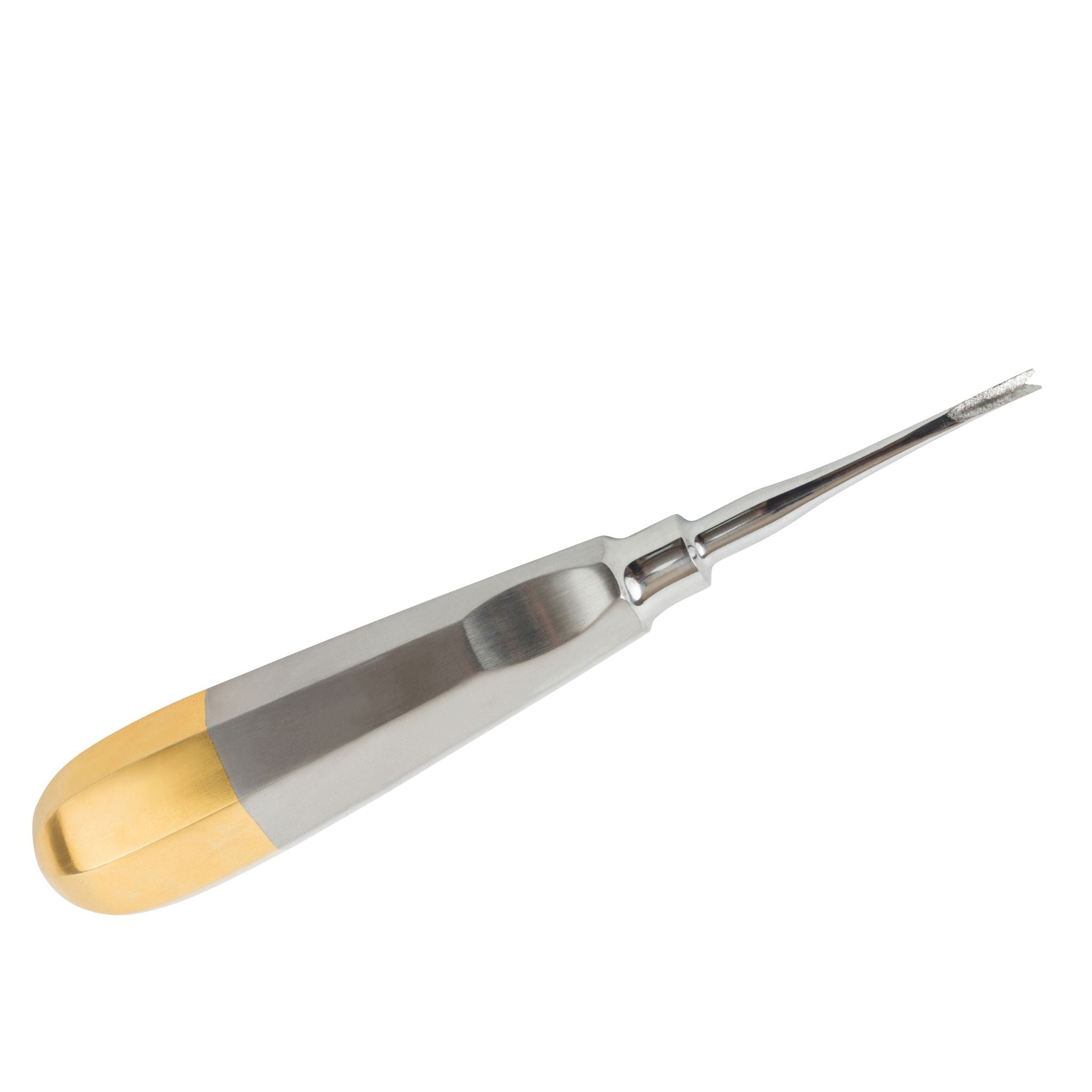
L-Vators™ Serrated Elevator — Start Here
L-Vators™ are where the extraction starts.
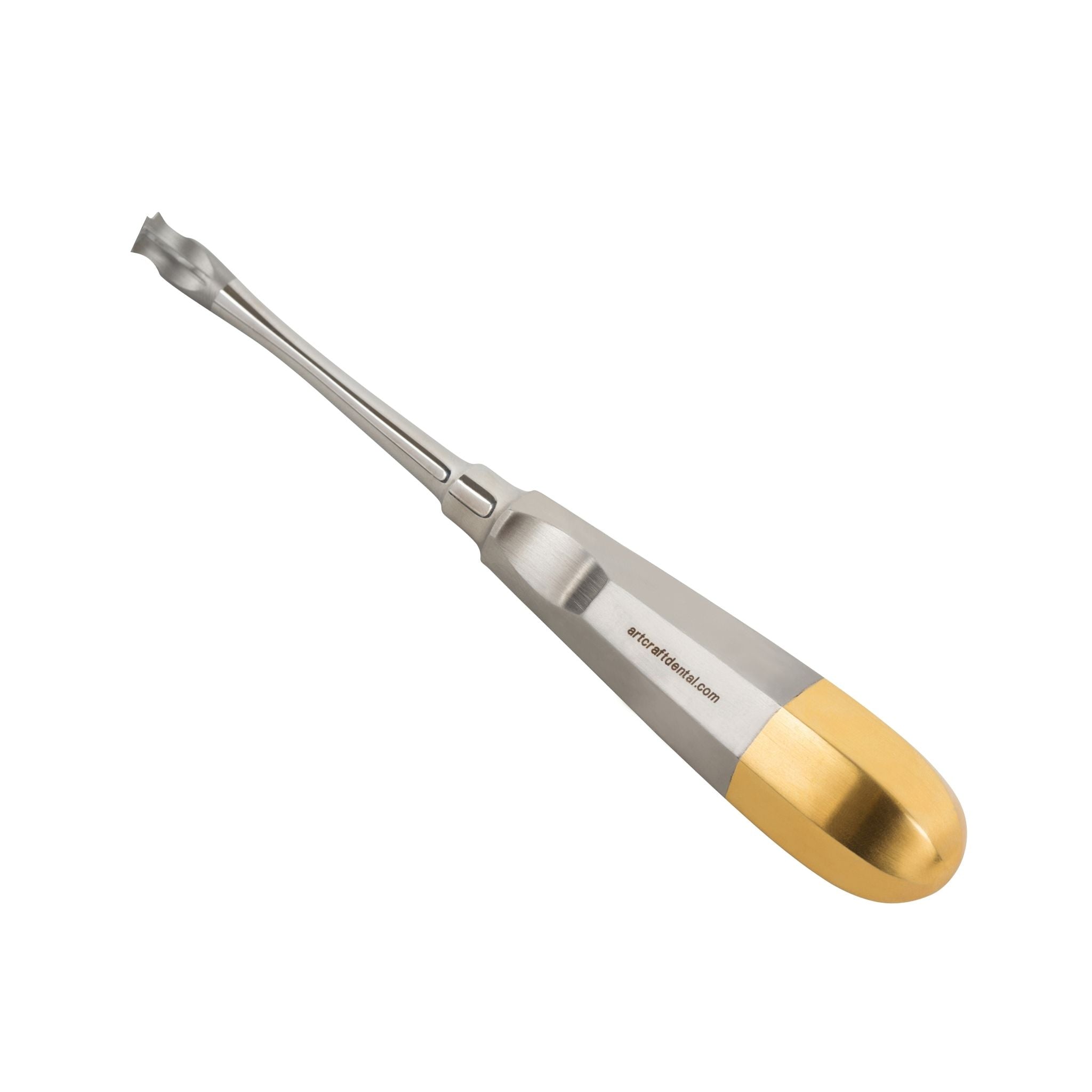
A lindo-levin style serrated elevator with more serrations than any other brand on the market, L-Vators™ make the initial pass into the PDL space to begin ligament disruption and early mesio-distal movement before any other instrument is placed.
The serration density is not a design detail — it is the core functional difference. Conventional smooth-tipped elevators slip under load. The serrated edges of L-Vators™ grip and stay, which means force transfers directly to the tooth rather than dissipating through instrument slippage. That grip is what makes the first pass actually productive rather than just a preliminary step.
The tips are powerful and durable — built to engage without bending or wearing down the way thinner atraumatic-style instruments tend to under repeated load.
L-Vators™ begin the mobility sequence. Everything that follows builds on the foundation they create.
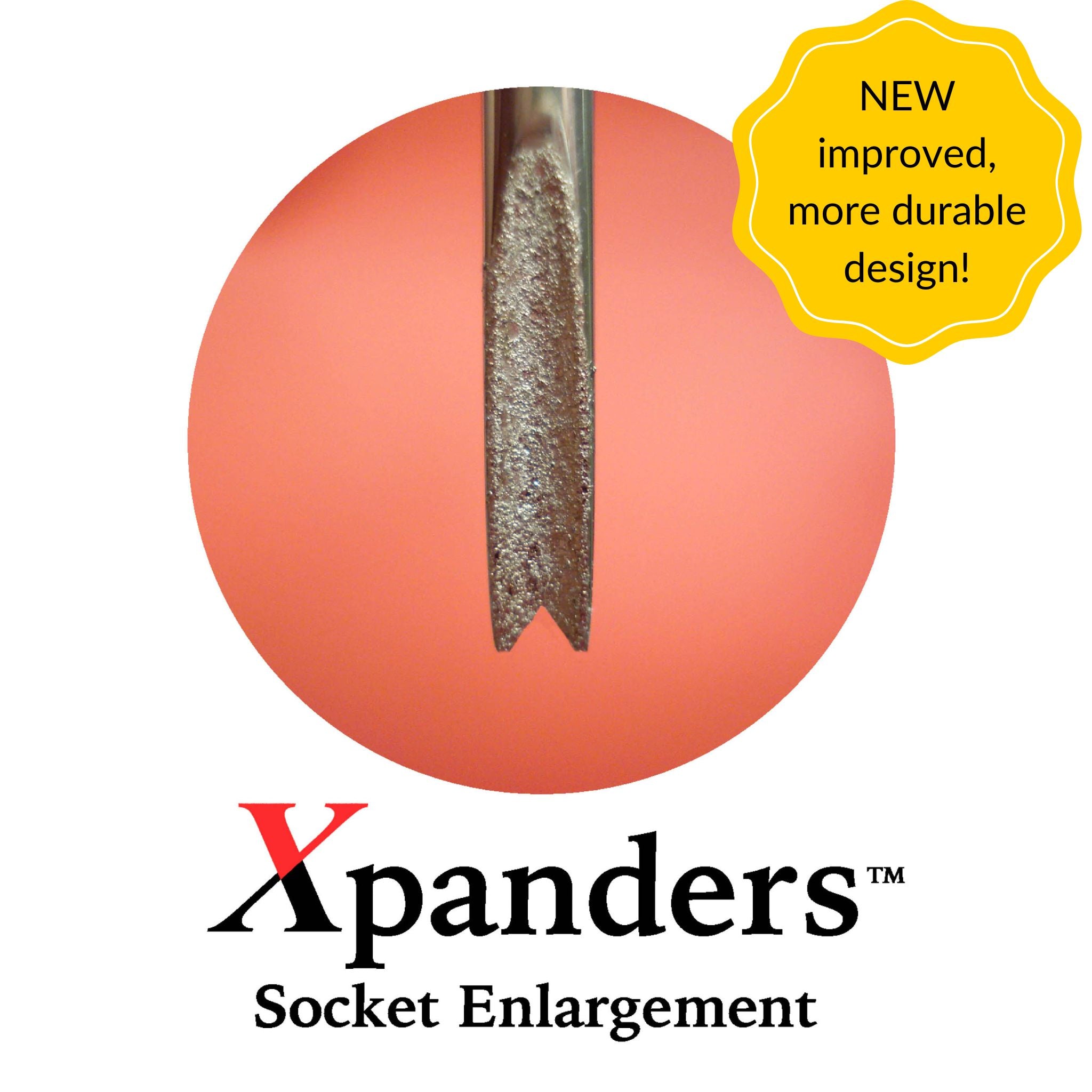
Xpanders™ — 360° Expansion
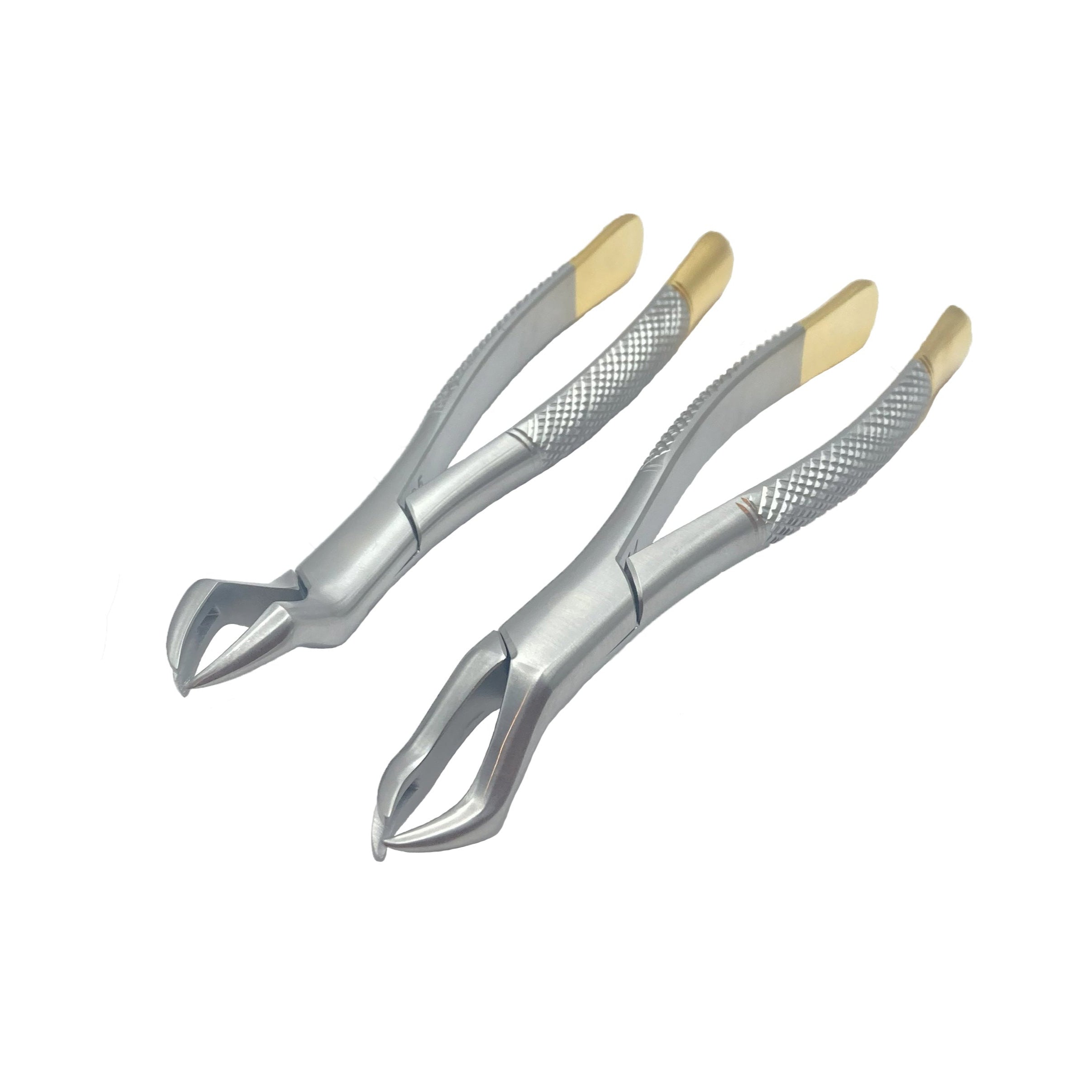
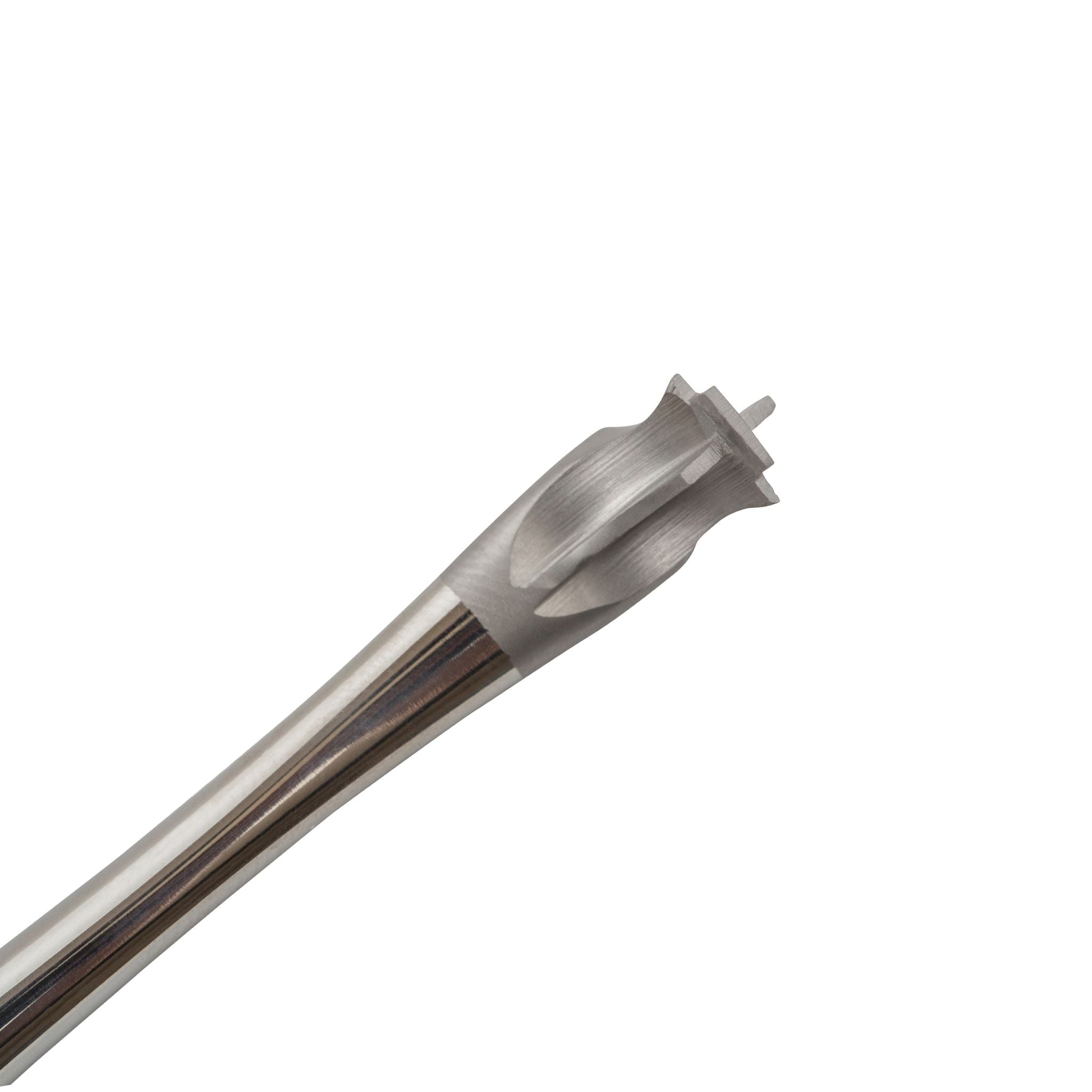
Xpanders™ do something that periotomes, luxators, and conventional elevators simply cannot: generate true bucco-lingual socket expansion through a double-pronged design that no single-contact instrument can replicate.
The double-pronged tip creates two-point contact simultaneously — one prong stabilizing against the crest of bone, the other engaging the neck of the tooth. A simple twisting motion locks one point while the other pushes the tooth laterally, expanding the socket in a controlled, repeatable way at each of the four corners of the tooth.
The result is 360-degree socket expansion with minimal PDL penetration — as little as 0.25 to 0.5mm — generating more lateral tooth movement than single-contact instruments achieve at far greater depth.
What that means clinically: the tooth actually moves. Not just loosens slightly, but develops real measurable bucco-lingual mobility before forceps are placed. When that mobility is present, extractions that would have been high-risk become predictable.
Four instruments cover the full mouth — anterior straight, bicupid curved, posterior in, posterior out — available as a full set or in anterior and posterior pairs.
"I took out my first tooth in 1973 and this is the best instrument I've ever used. I use Xpanders on almost every tooth I extract." — Ted French, DDS
"The best instrument for extraction. I work on 3 different clinics and I had to purchase Xpanders for all of them because it's very difficult for me to go back to other elevators." — Armend Kosumi, DDS
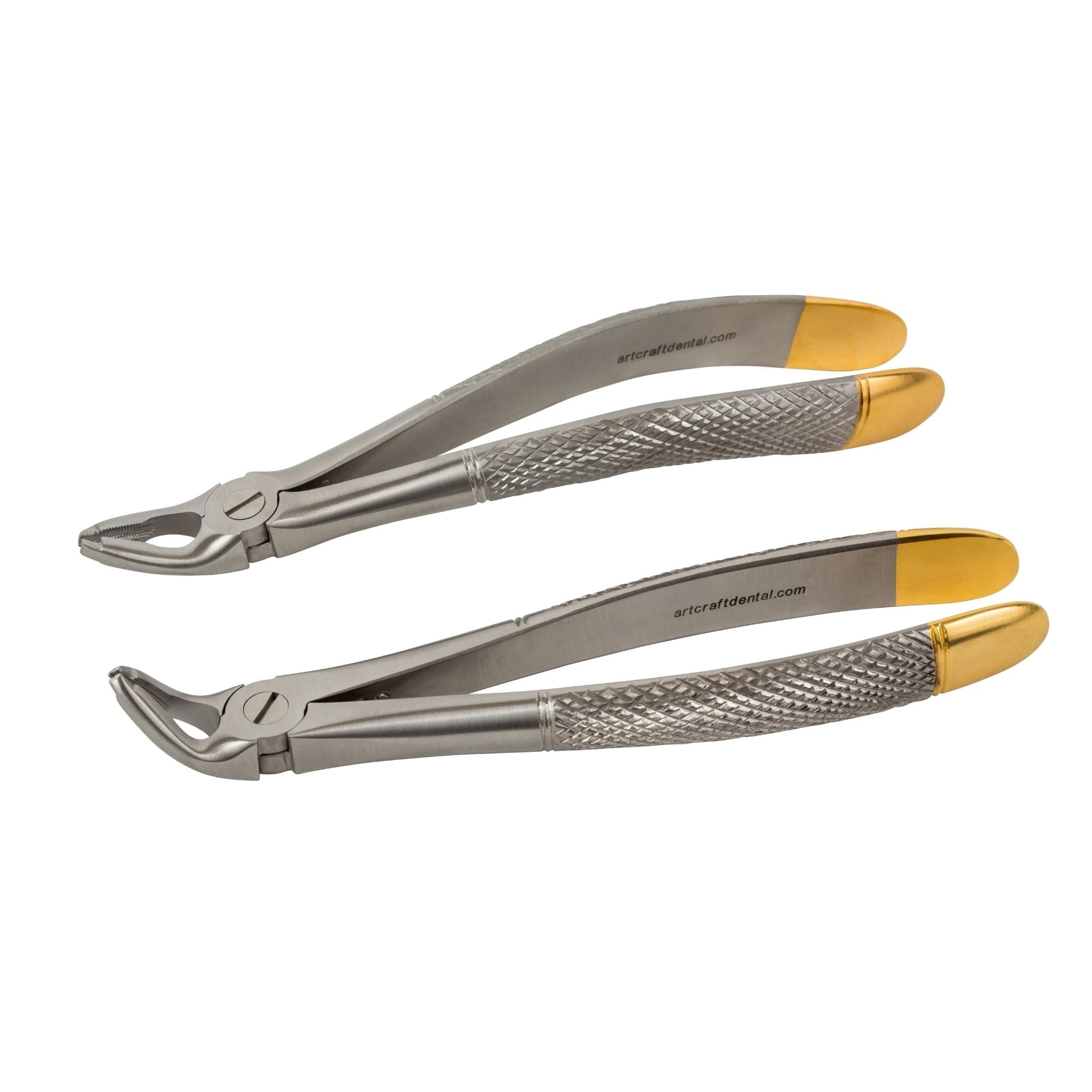
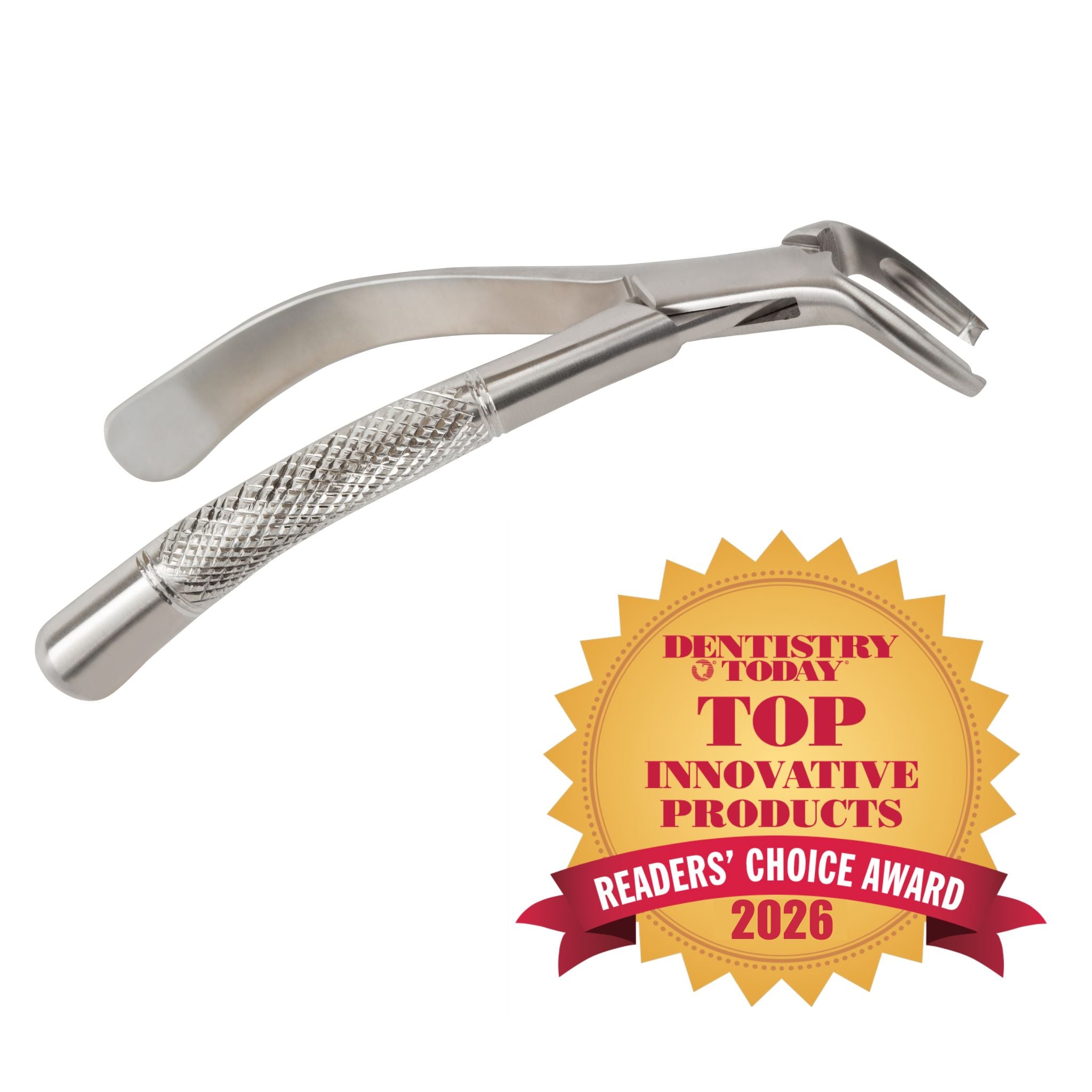
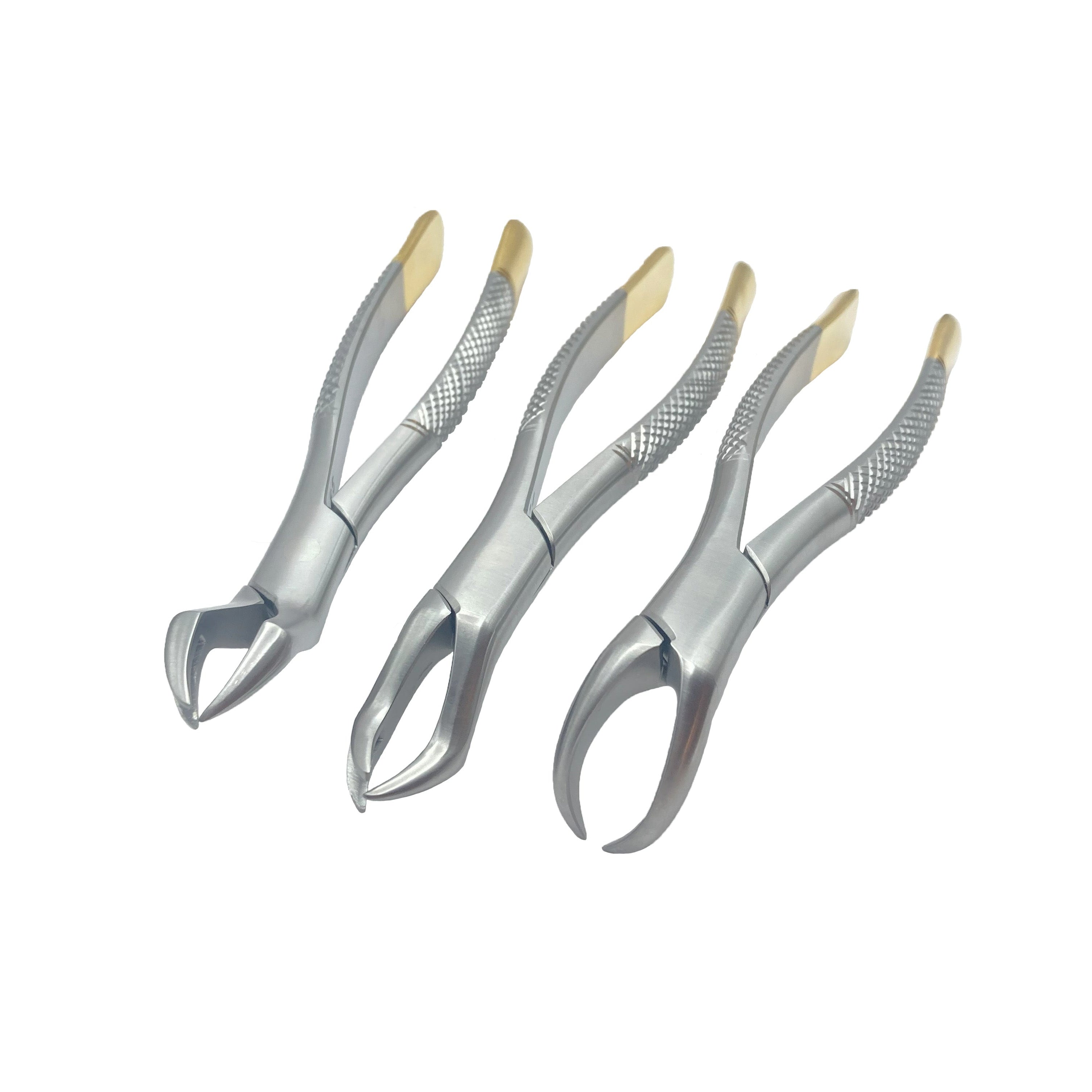
TraXion™ Forceps — Delivery That Finishes the Job
Pre-forceps mobility only matters if the forceps can maintain grip through delivery.
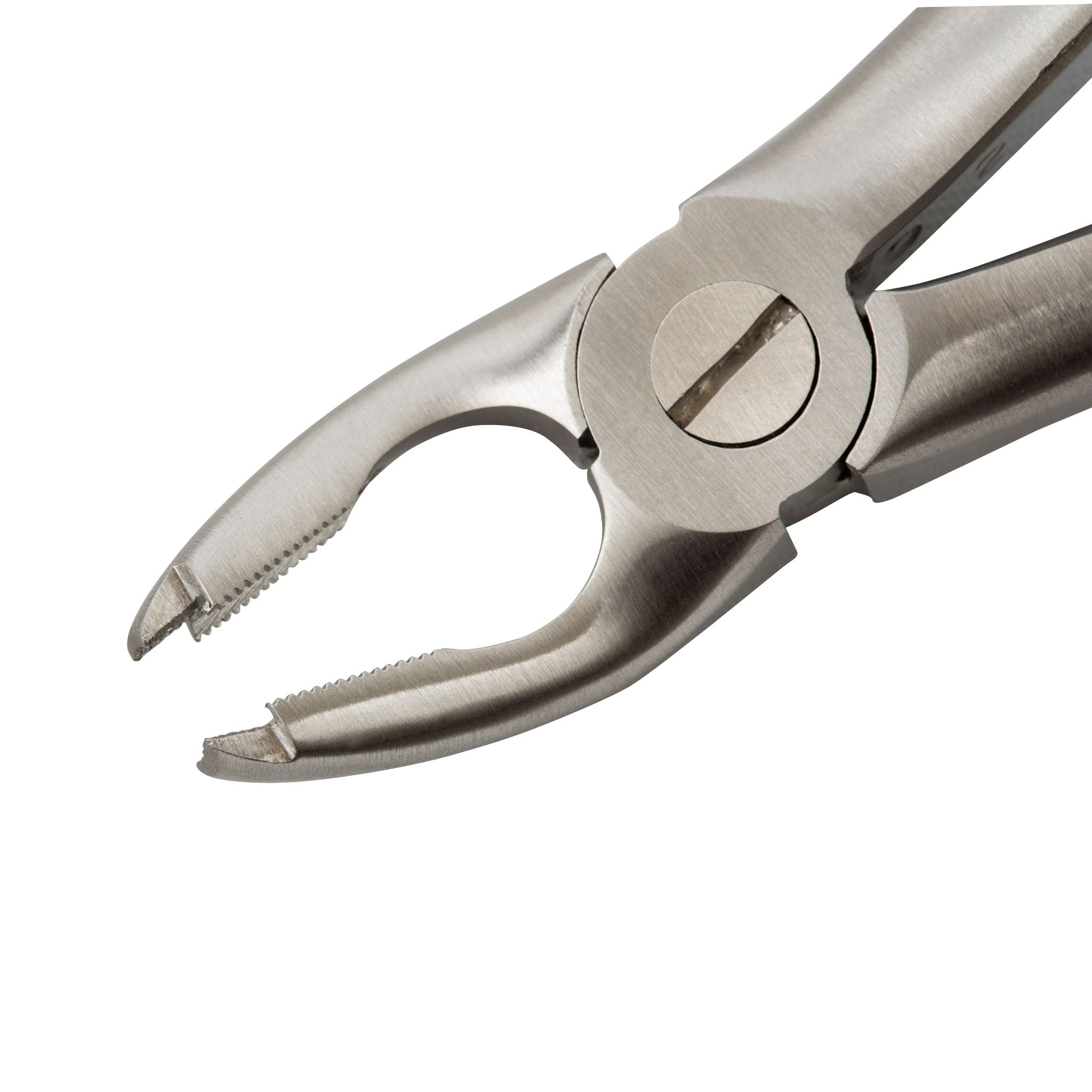
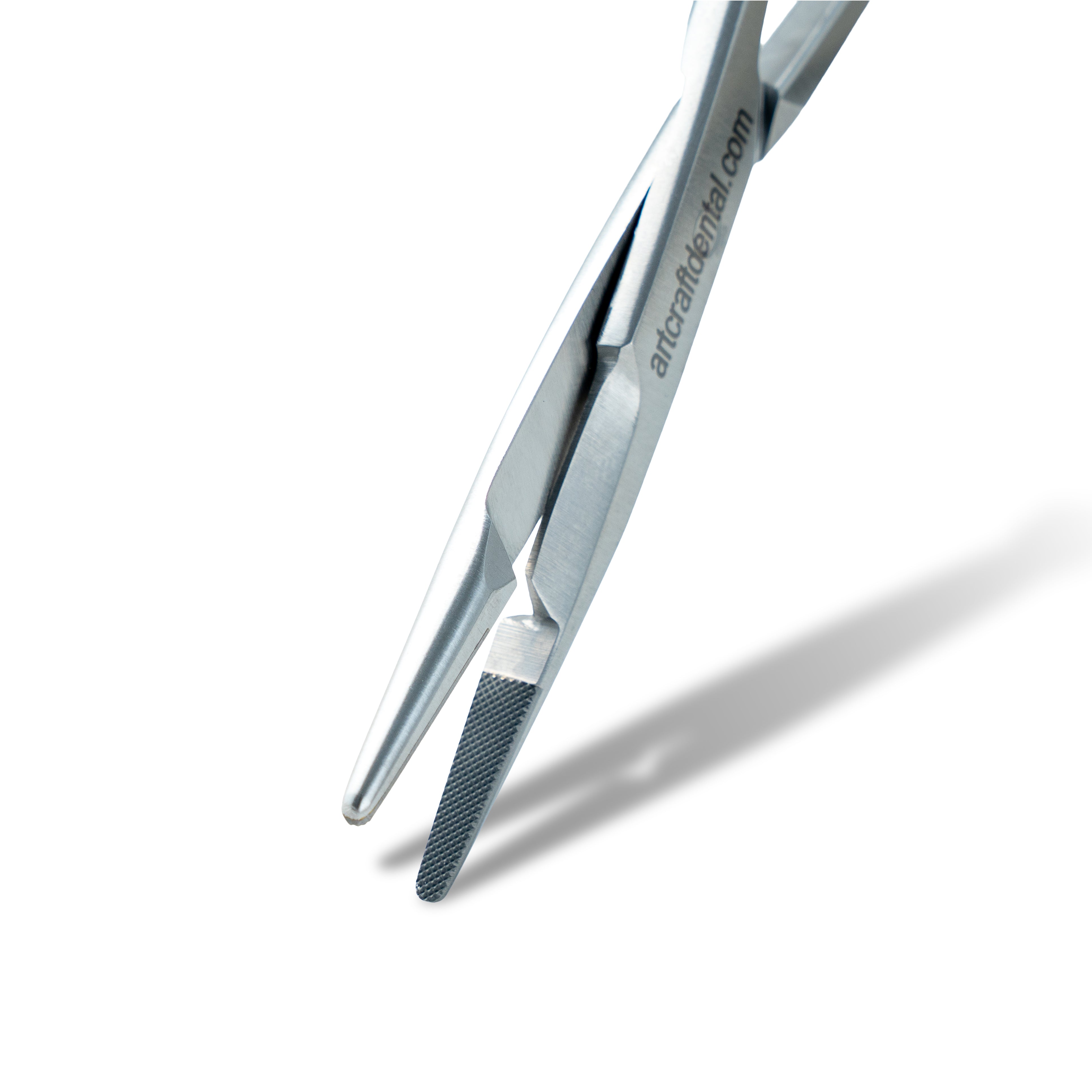
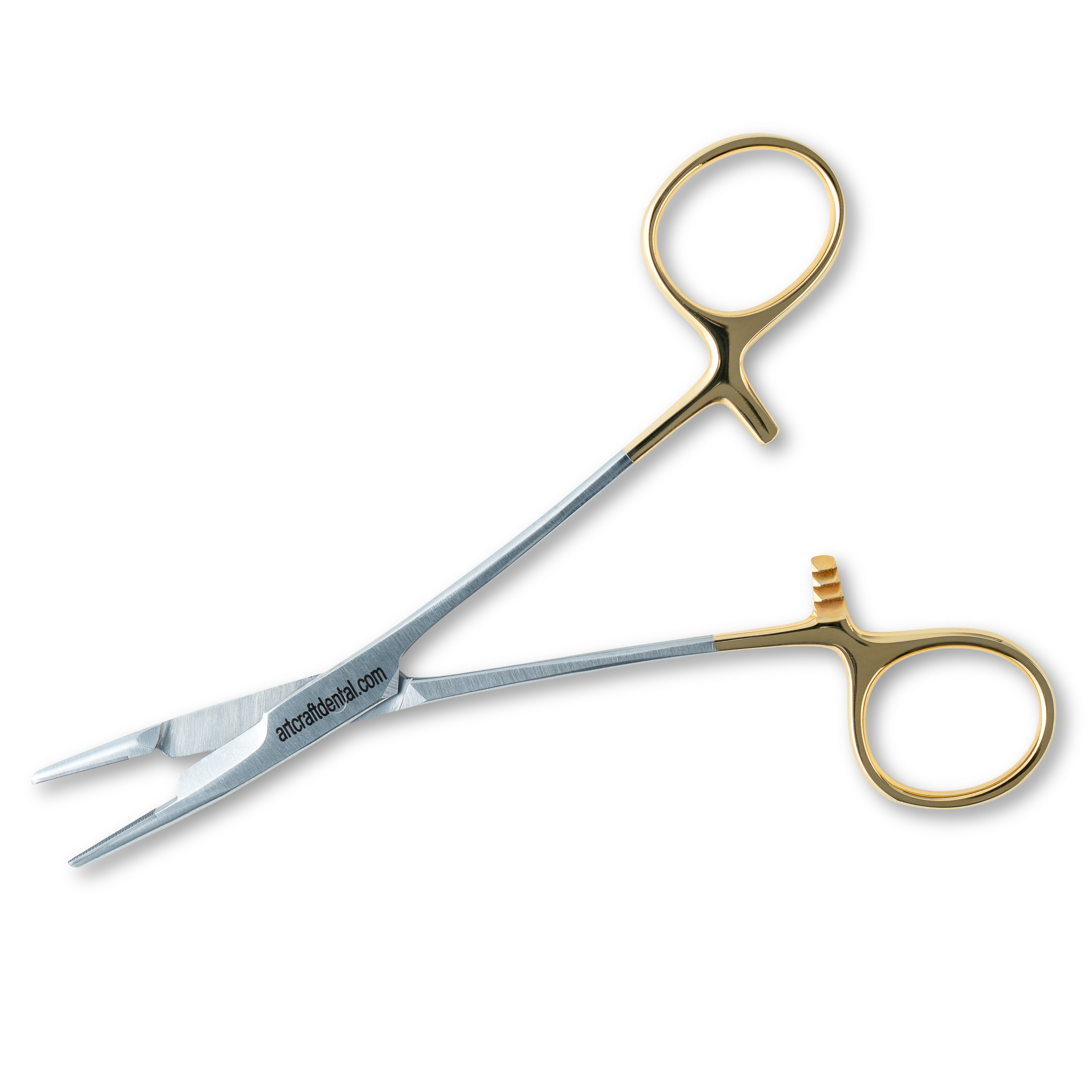
TraXion™ Forceps were designed with a serrated beak that locks onto the tooth and does not slip — on teeth with minimal coronal structure, on wet surfaces, on the cases where smooth-beaked forceps lose purchase at exactly the wrong moment.
The beak geometry matters equally. Traditional forceps feature dramatically curved beaks that contact the tooth only at the cervical margin — concentrating force at the tooth's narrowest and most fracture-prone point. TraXion™ beaks are less curved, contacting more total tooth surface and distributing extraction force more evenly. Less pinching. Less crown fracture risk. More controlled delivery.
When L-Vators™ and Xpanders™ have done their job and the tooth is genuinely mobile, TraXion™ Forceps complete the extraction with minimal additional force. A tooth that has been properly prepared should deliver cleanly — TraXion™ makes sure the grip is there to let that happen.
Available in upper, lower, or as a set of both.
Also Worth Having on Your Extraction Tray: Golden Retriever™ Spears
The three instruments above form the core atraumatic extraction system. But there is a fourth instrument that a growing number of dentists are adding to their tray — not as a replacement for any of the above, but as a powerful complement to them.
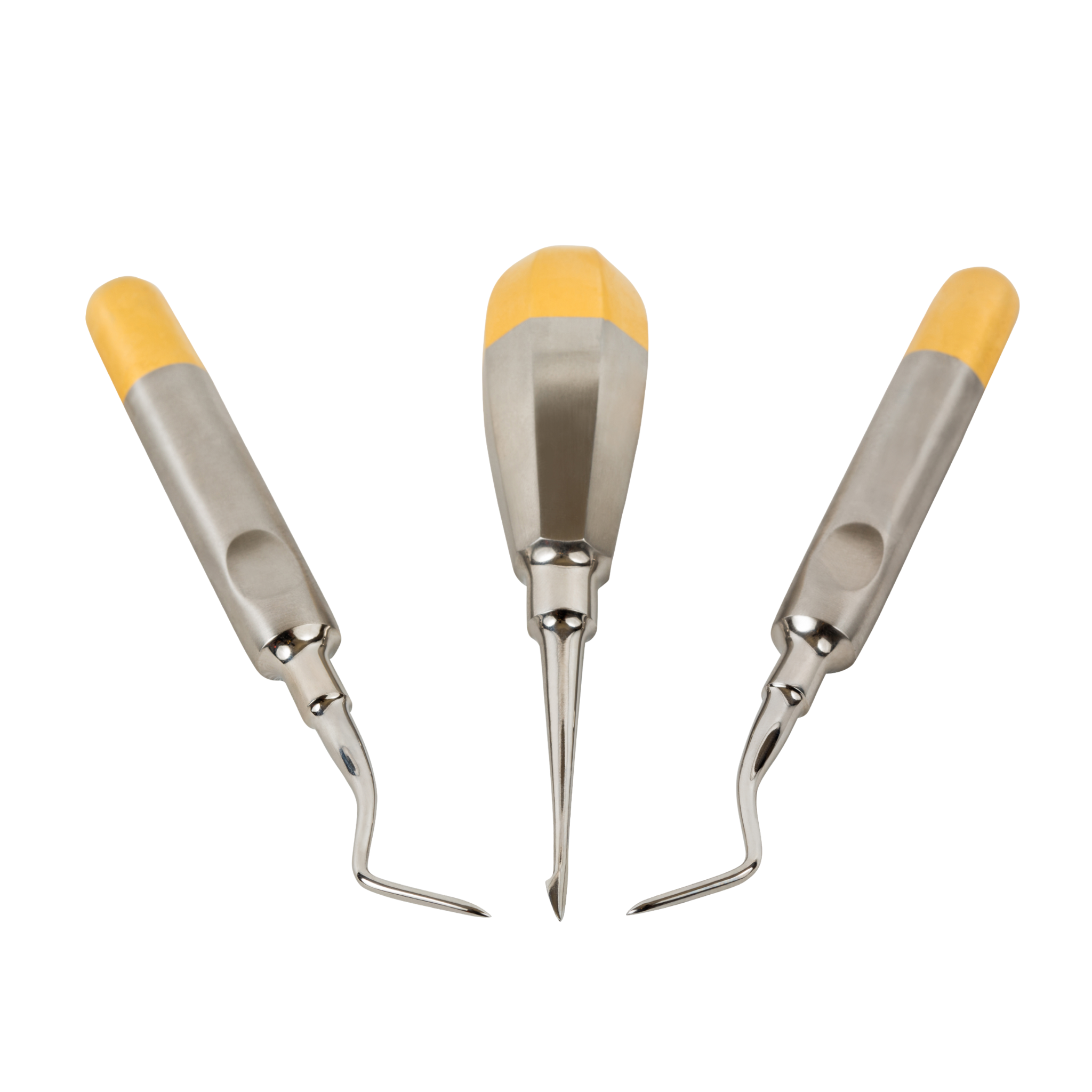
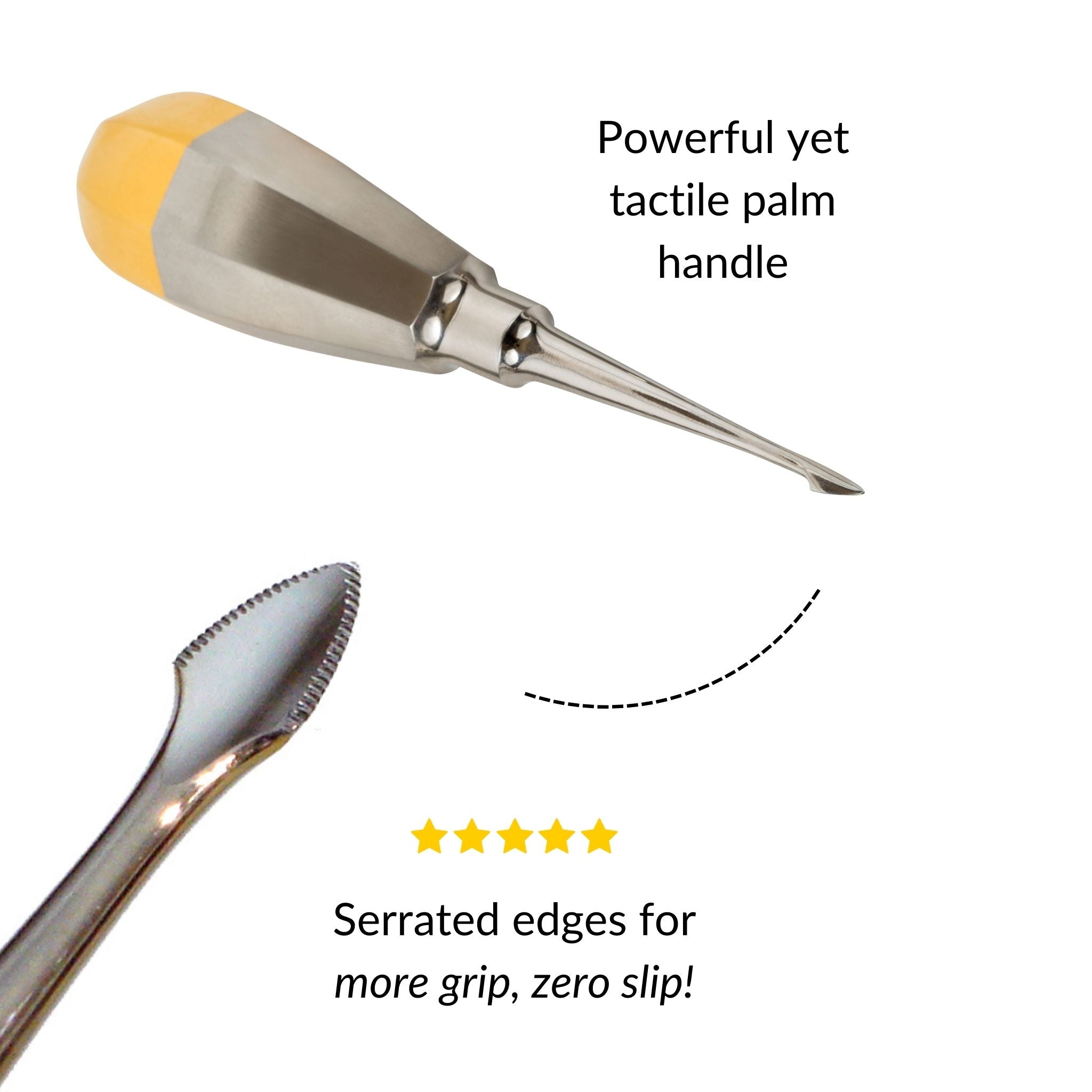
The Golden Retriever™ Spear is a purpose-built elevator with an ergonomic palm handle designed to generate deep PDL penetration and lateral wedging — more power and control than conventional elevator designs allow.
Where it stands out:
-
Palm handle design — transfers force from the whole hand rather than a pinch grip, giving more controlled power with less operator fatigue
-
Serrated edges — cut through PDL and gingival attachment faster than smooth-tipped instruments
-
Deep PDL penetration — wedges teeth laterally for cases that need more than standard elevator access provides
-
Versatile across case types — excellent for bombed-out or decayed retained roots, sectioned multi-rooted teeth, and as a general pre-extraction elevator on challenging cases
"I love this set. These things have saved me more than I can count!" — Dan Carrier, DDS
Available in Straight, Posterior, and Set of 3. Pairs naturally with the Golden Retrievers™ root tip pick set for deep broken root tip retrieval.
Whether it becomes a routine addition to your extraction sequence or a go-to instrument for more challenging cases, the Spear is the kind of instrument most dentists wish they had found sooner.
The Instruments, Not the Technique
Most extraction complications do not come from technique failures.
They come from instruments that were not built to generate the pre-forceps mobility that makes atraumatic extraction work in practice — not just in principle.
Periotomes that flex before they can move the tooth. Luxators that slip rather than grip. Straight elevators that lever against bone rather than expand the socket. Forceps that lose purchase on delivery.
Each instrument above was designed by Dr. David Fyffe, DDS, to address one specific failure point in that chain — not as standalone tools, but as a coordinated extraction system where each instrument does what the next one needs it to do.
The core three — L-Vators™, Xpanders™, and TraXion™ Forceps — are available together in the ArtCraft Surgical Extraction Bundle. Everything ships fast and free, backed by a 60-day money-back guarantee.
If broken root tips, buccal plate fractures, or unpredictable extractions are more common in your practice than they should be — the instruments are worth examining before the technique is.