
Ask any restorative dentist what quietly destroys schedule flow and it usually is not the big procedures.
It is the small ones.
A temporary crown that does not release.
Your assistant calling you into the room because it will not pop off.
A front desk reshuffling appointments because something that should have taken seconds turned into several minutes of chairside frustration.
And in some practices, the default solution is still what it was decades ago.
Cut it off.
That approach still exists more than most people admit. Not because it is ideal, but because in the moment it feels faster than fighting a temporary that refuses to disengage.
The problem is that it is not fast. It is just familiar.
And over the course of a day, those “quick fixes” add up to real inefficiency, unnecessary reduction of provisional material, and more patient discomfort than anyone wants to acknowledge.
The real question is simple.
What is actually the fastest way to remove temporary crowns chairside without turning it into a production delay?
Why Temporary Crown Removal Still Slows Down Clinical Flow
Temporary crowns are deceptively simple.
When they come off easily, the procedure feels like nothing.
When they do not, everything changes.
Most dentists have experienced the same pattern:
-
Assistant attempts removal with hemostats or forceps
-
Temporary flexes but does not release
-
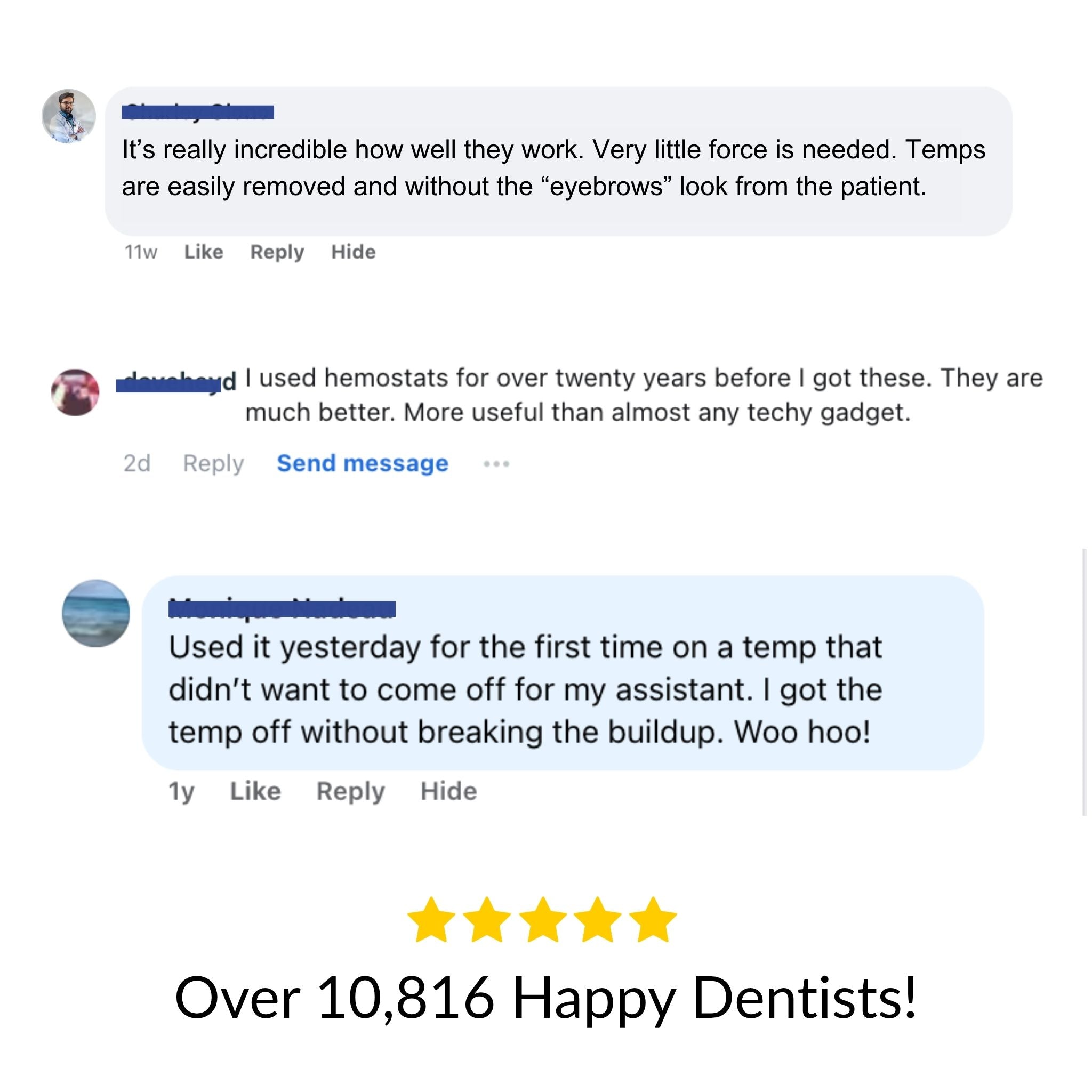
Patient raises eyebrows as pressure increases
-
Doctor has to anesthetize the patient
-
Assistant calls the doctor in
-
More force is applied
-
Time disappears from the schedule
In some cases, the only remaining option becomes cutting the temporary off.
While that solves the immediate problem, it creates a new one.
Now the crown must be remade or adjusted, the prep may be compromised, and what should have been a 10 second step becomes a multi-step disruption in the appointment.
The real issue is not difficulty.
It is inconsistency.
Temporary crown retention varies, and most traditional instruments were never designed specifically for fast disengagement without distortion or cutting.
Why Hemostats and Traditional Instruments Slow Everything Down
Many operatories still rely on instruments like hemostats or general crown removal forceps like rubber tipped instruments, because they are already on the tray.
The logic is simple: if it is already there, it must be efficient enough.
But in practice, these instruments were never designed specifically for temporary crown removal.
They tend to:
-
slip on acrylic surfaces
-
require repeated attempts
-
apply uneven force
-
create patient sensitivity during removal
-
require excessive hand force from the assistant
That is where the slowdown begins.
What should be a single controlled motion turns into multiple adjustments, repositioning, and increasing force until something finally gives.
And when it does not, the fallback becomes cutting the temporary off entirely, which is even slower when you factor in cleanup, adjustment, and re-cementation considerations.
This is the hidden inefficiency in many restorative workflows.
Not major procedures.
Small repeated delays.
The Fastest Way to Remove Temporary Crowns Chairside
Speed in temporary crown removal does not come from more force.
It comes from using the right instrument designed for the job.
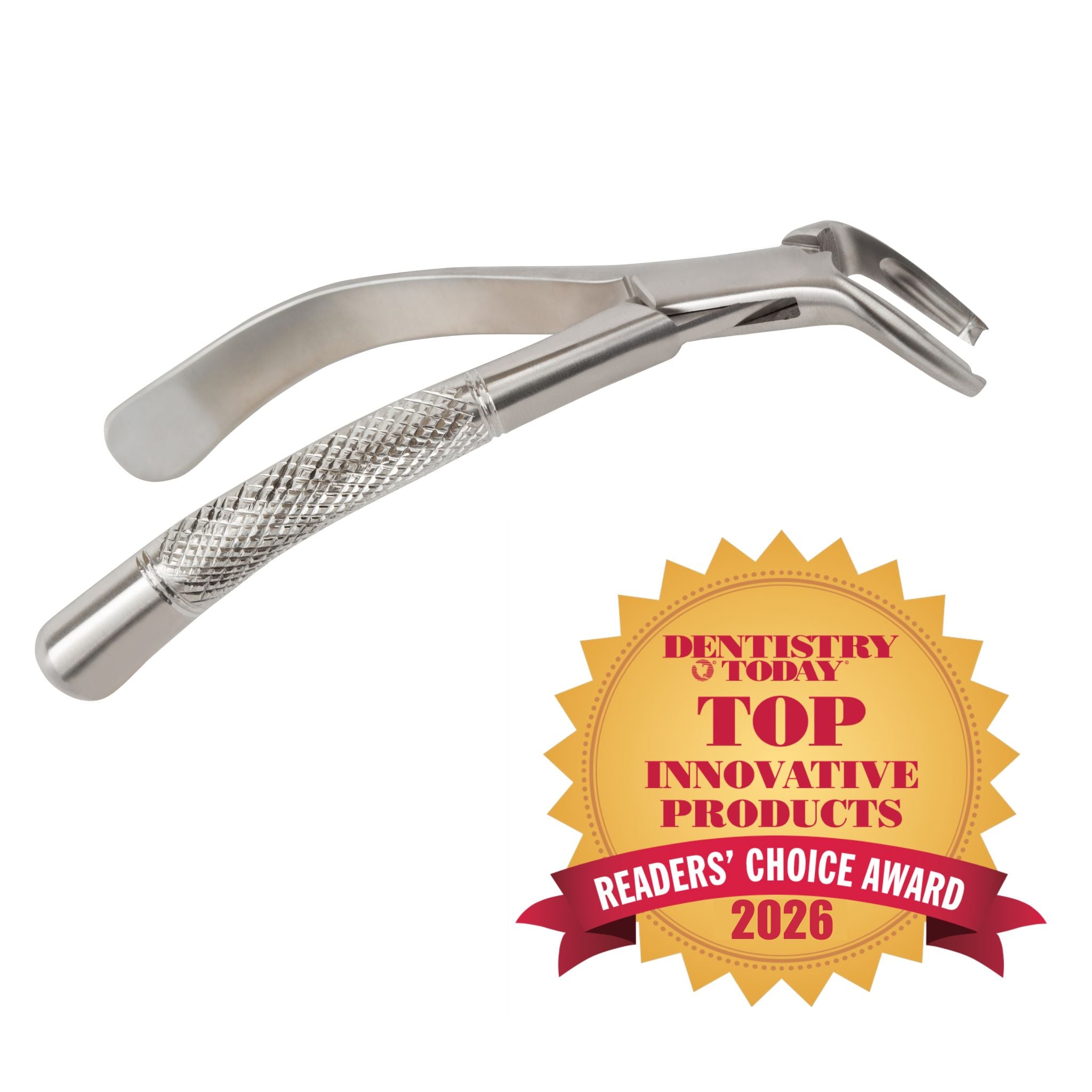
That is the principle behind TempOff® by ArtCraft Dental.
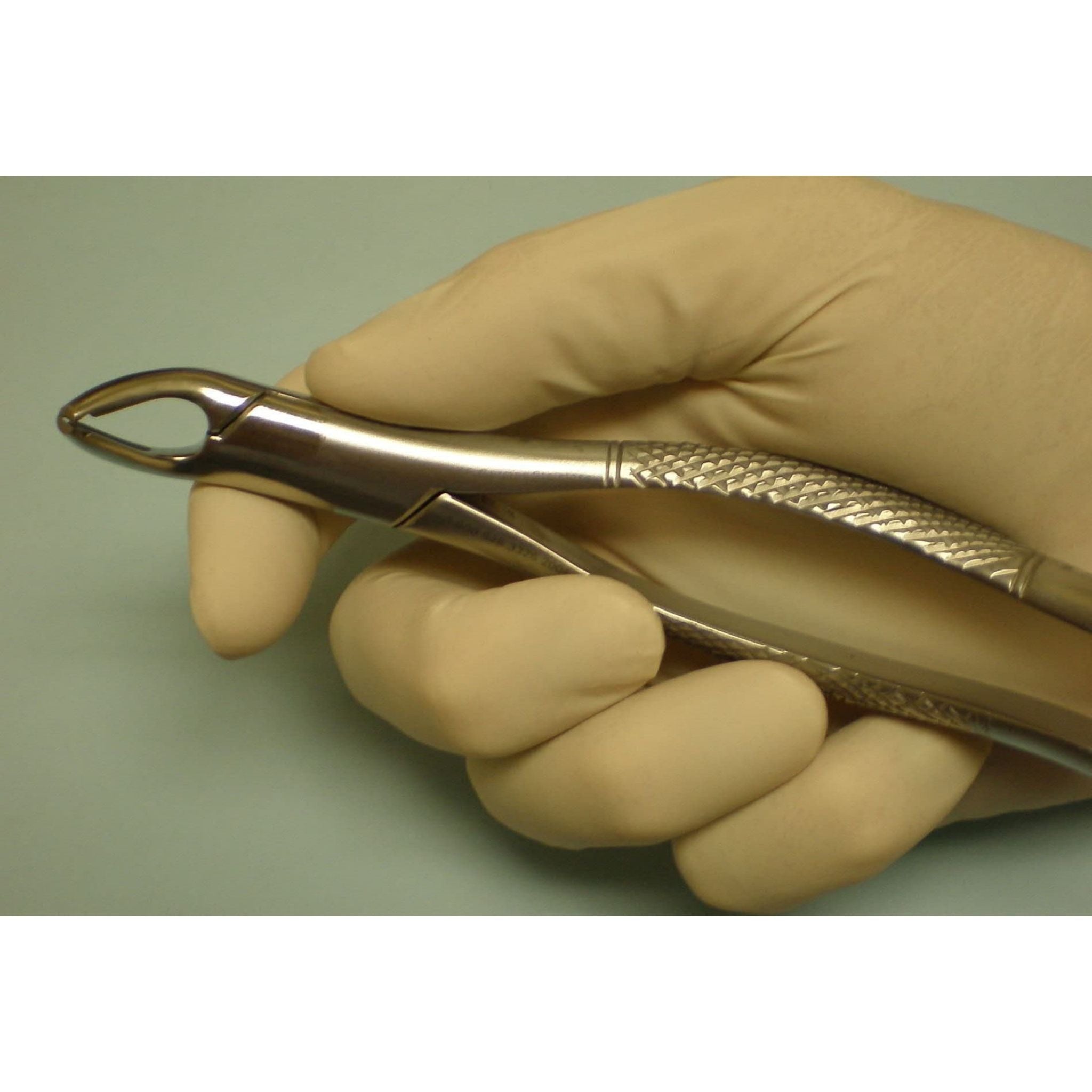
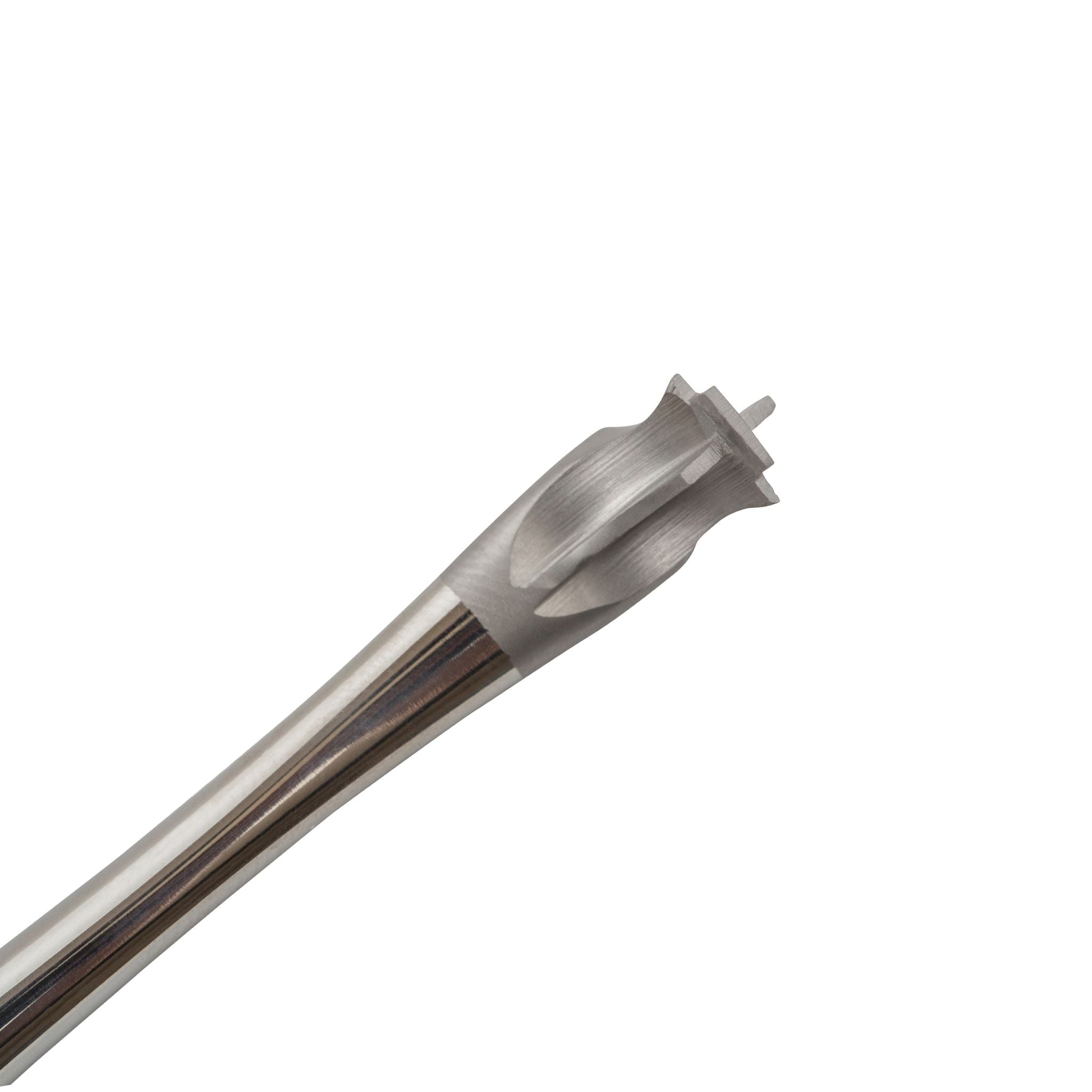
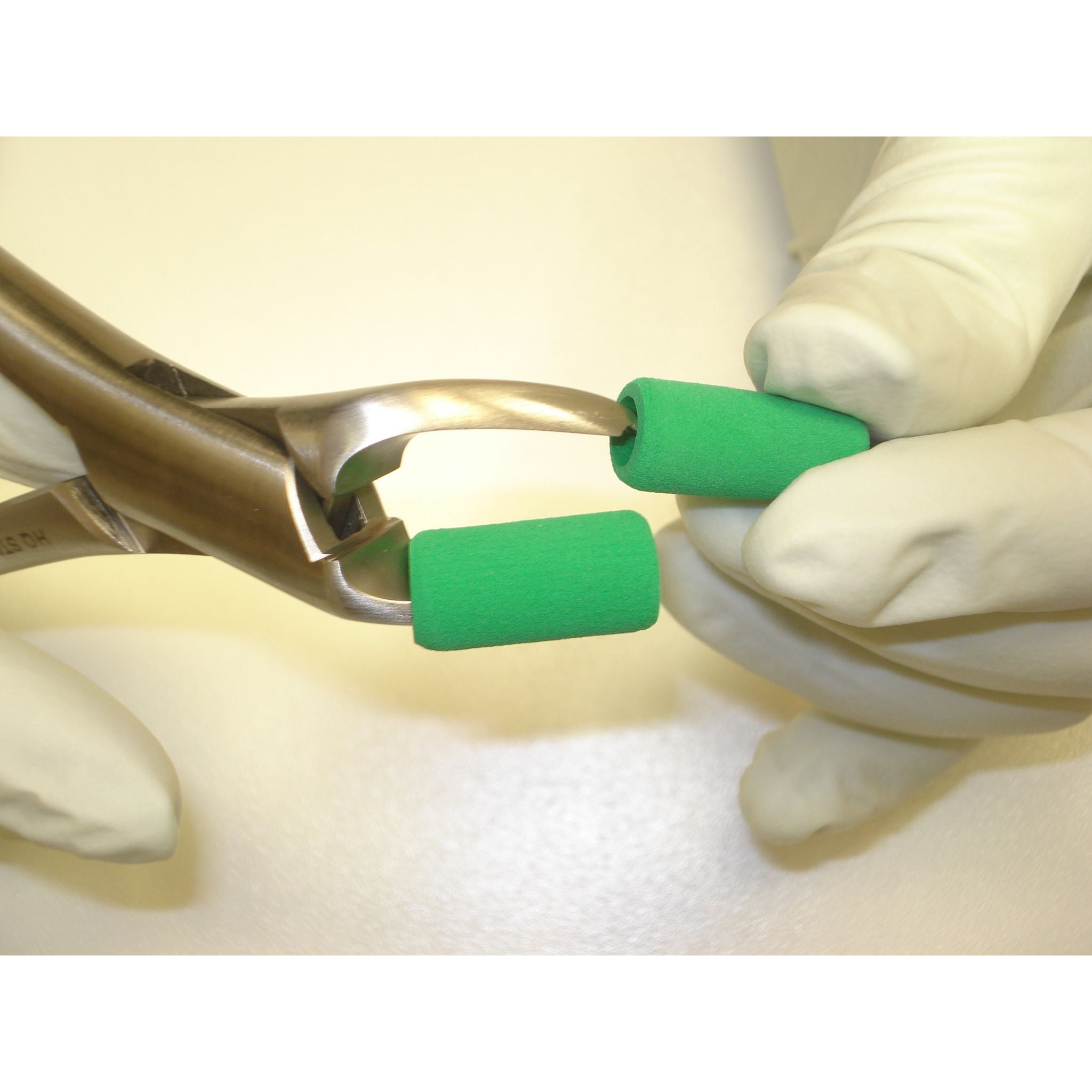
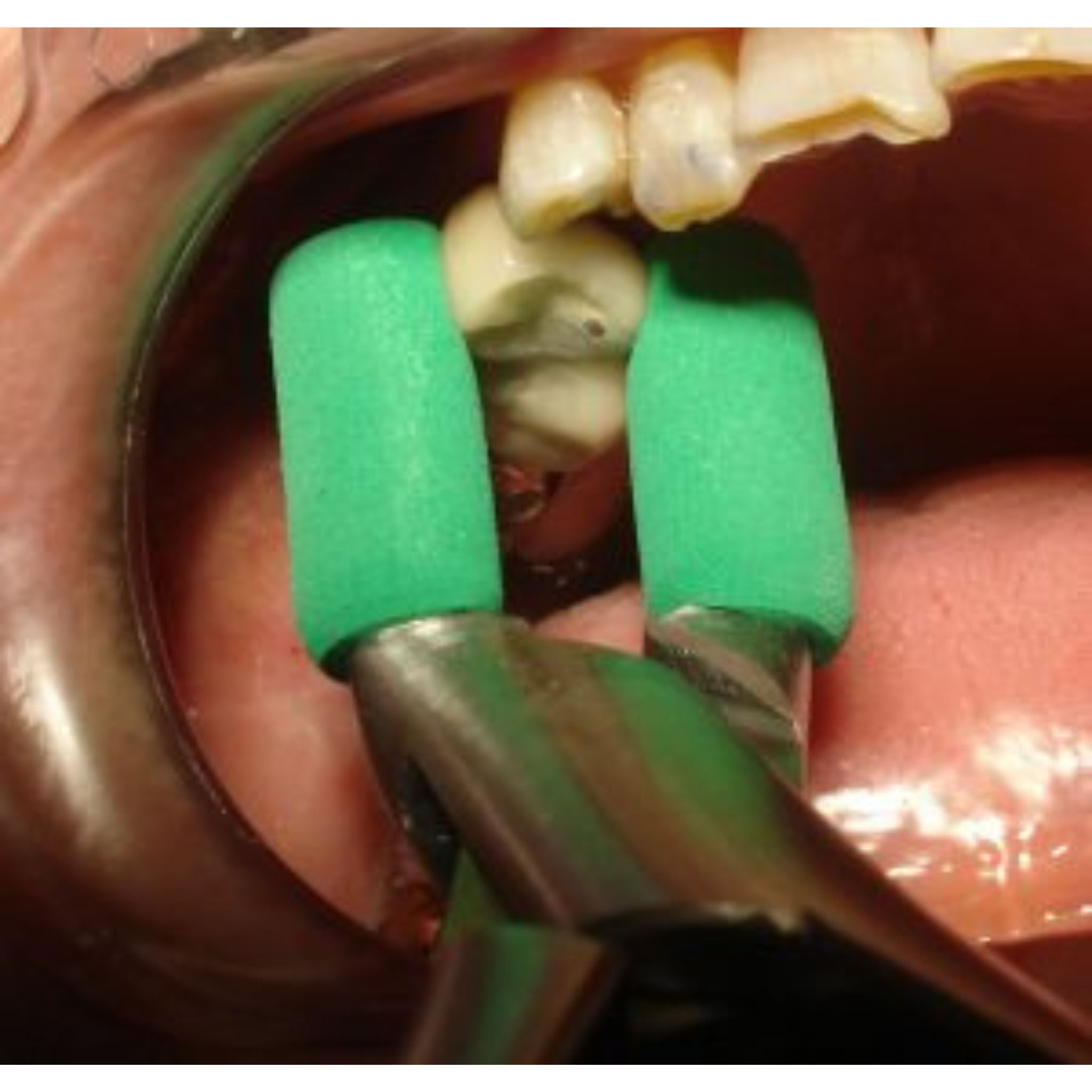
Instead of gripping randomly like traditional instruments, TempOff® is designed with four points of contact that lock onto the temporary crown in the upper third.
Once engaged, the removal is not a pulling motion.
It is a short, controlled rocking movement that breaks the cement contact predictably.
In most cases, the temporary comes off in 3 to 5 seconds.
No slipping.
No repeated attempts.
No assistant escalation into the operatory.
And importantly, by locking onto the upper third of the temporary crown, all force is transferred to the temporary not the tooth. Because of this, the patient hardly feels a thing. It also dramatically reduces the need to cut off temporaries, even in cases where they resist initial removal.

Why Cutting Off Temporaries Is Still Common (and Why It Should Not Be)
Despite better instruments existing, many clinicians still default to cutting off temporaries in difficult cases.
It feels decisive in the moment.
It eliminates the struggle immediately.
But it introduces downstream inefficiencies:
-
additional time removing material
-
potential damage to underlying prep margins
-
remaking or adjusting the temporary
-
increased chairside fatigue
-
The need to anesthetize the patient
-
patient perception of a more aggressive procedure
The irony is that cutting the temporary often takes longer than properly disengaging it would have in the first place.
This is where the workflow shifts with a purpose-built instrument.
Instead of escalating force or resorting to cutting, TempOff® allows the clinician or assistant to maintain a controlled removal process that preserves the temporary and keeps the appointment moving.
Why Assistants Drive Faster Workflow With the Right Instrument
One of the most overlooked benefits of a dedicated temporary crown remover is delegation efficiency.
When assistants rely on hemostats or generic forceps, they often reach a point where they feel uncertain and call the doctor in.
That interrupts flow immediately.
With a tool designed specifically for the task, assistants can confidently complete removal without escalation.
That single change reduces interruptions, protects the doctor’s time, and stabilizes schedule flow across the day.
In busy restorative practices, that difference compounds quickly.
Final Thoughts
The fastest way to remove temporary crowns chairside is not about more force or cutting faster.
It is about eliminating variability in how the temporary is engaged and released.
Traditional instruments like hemostats can work, but they are inconsistent, slower than they appear, and often lead to escalation into cutting the temporary off entirely.
TempOff® was designed to remove that friction from the process.
A controlled grip. A short rocking motion. A clean release in seconds.
If temporary crown removal is still occasionally turning into a slowdown in your schedule, TempOff® is worth adding to your tray setup. Many practices find that once it becomes standard workflow, they stop thinking about temporary removal as a “step” at all.
Just a quick motion and you are done.
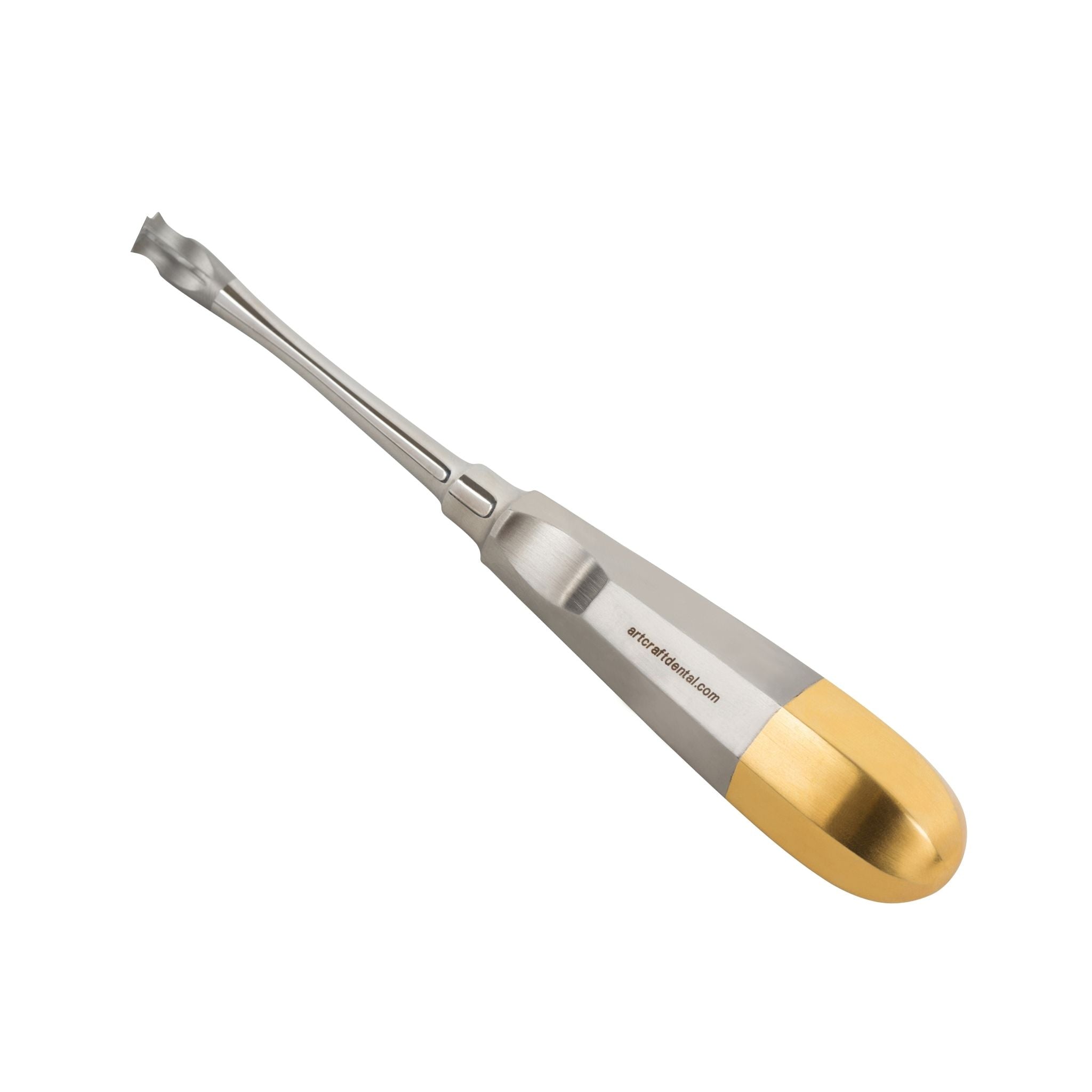
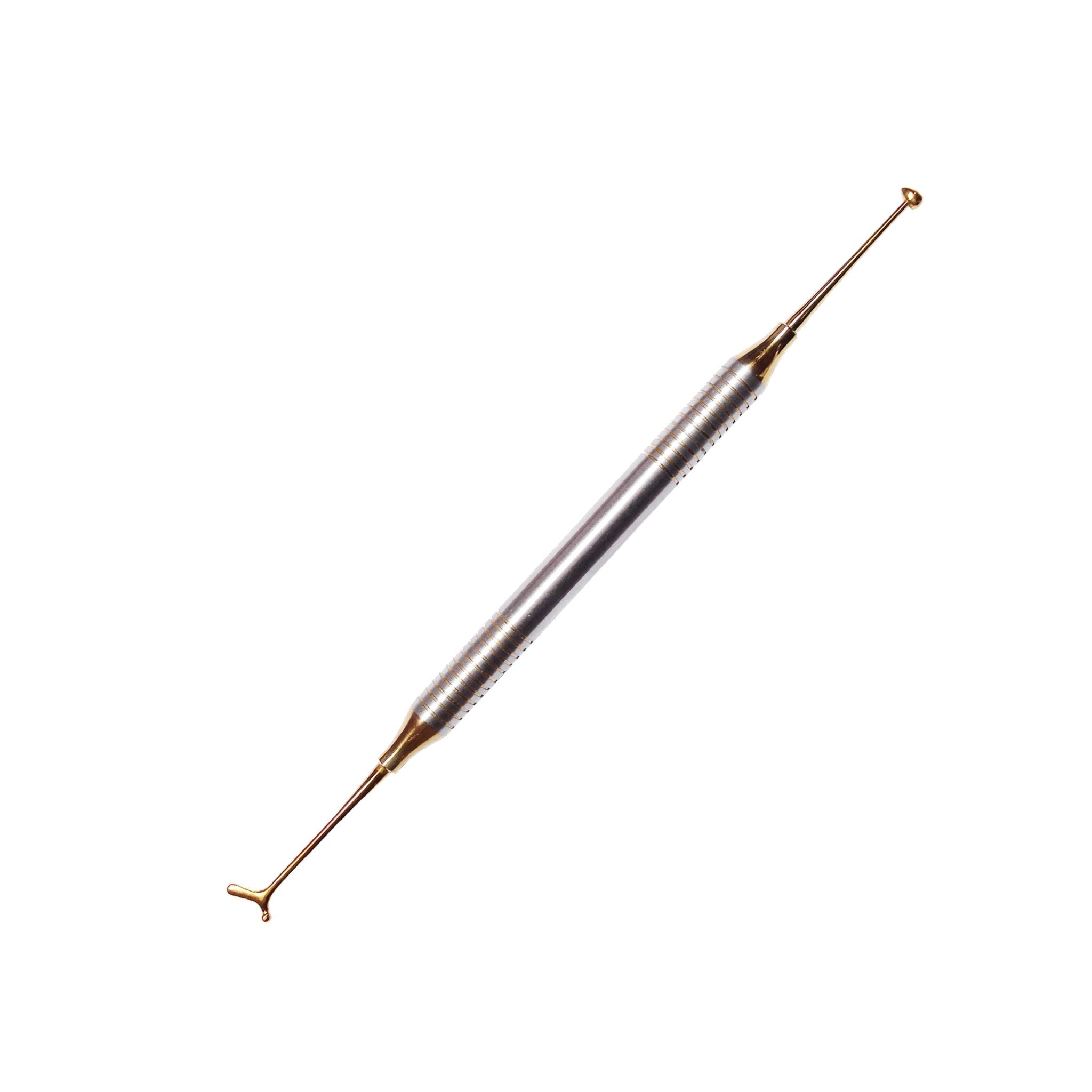
At ArtCraft Dental, instruments are designed by dentists who understand that efficiency is often lost not in the big procedures, but in the small repetitive ones that happen all day long. From TempOff® Temporary Crown Removers to Crown Sectioning Burs and Extraction Instruments, the focus is always the same: make the workflow faster, cleaner, and more predictable.