
Restorative dentistry is not slow because the procedures are inherently time-consuming.
It is slow because of the friction points in between.
The stuck temporary crown that requires five minutes of prying with a hemostat. The permanent crown that needs to come off and won't. The composite restoration where pullback ruins the margin and you have to start over. The sectional matrix that is wedged so tight you spend three minutes trying to get it out without disturbing the restoration. The crown seating where you can't confirm contact accuracy and end up adjusting by feel.
None of those are clinical failures. They are instrumentation inefficiencies — and they accumulate across a restorative schedule faster than most dentists realize.
These five instruments address exactly those friction points. Each one was designed by a dentist who experienced them firsthand.
1. TempOff® — Temporary Crown Removal in 2–3 Seconds
The standard approach to removing a stuck temporary crown is the hemostat. Every dentist knows the routine: clamp, rock, twist, hope it doesn't slip or fracture. When the provisional is well-adapted or the cement bond is stronger than expected, that process can stretch to five minutes or more — with the patient braced the entire time.
TempOff® eliminates that pain entirely.
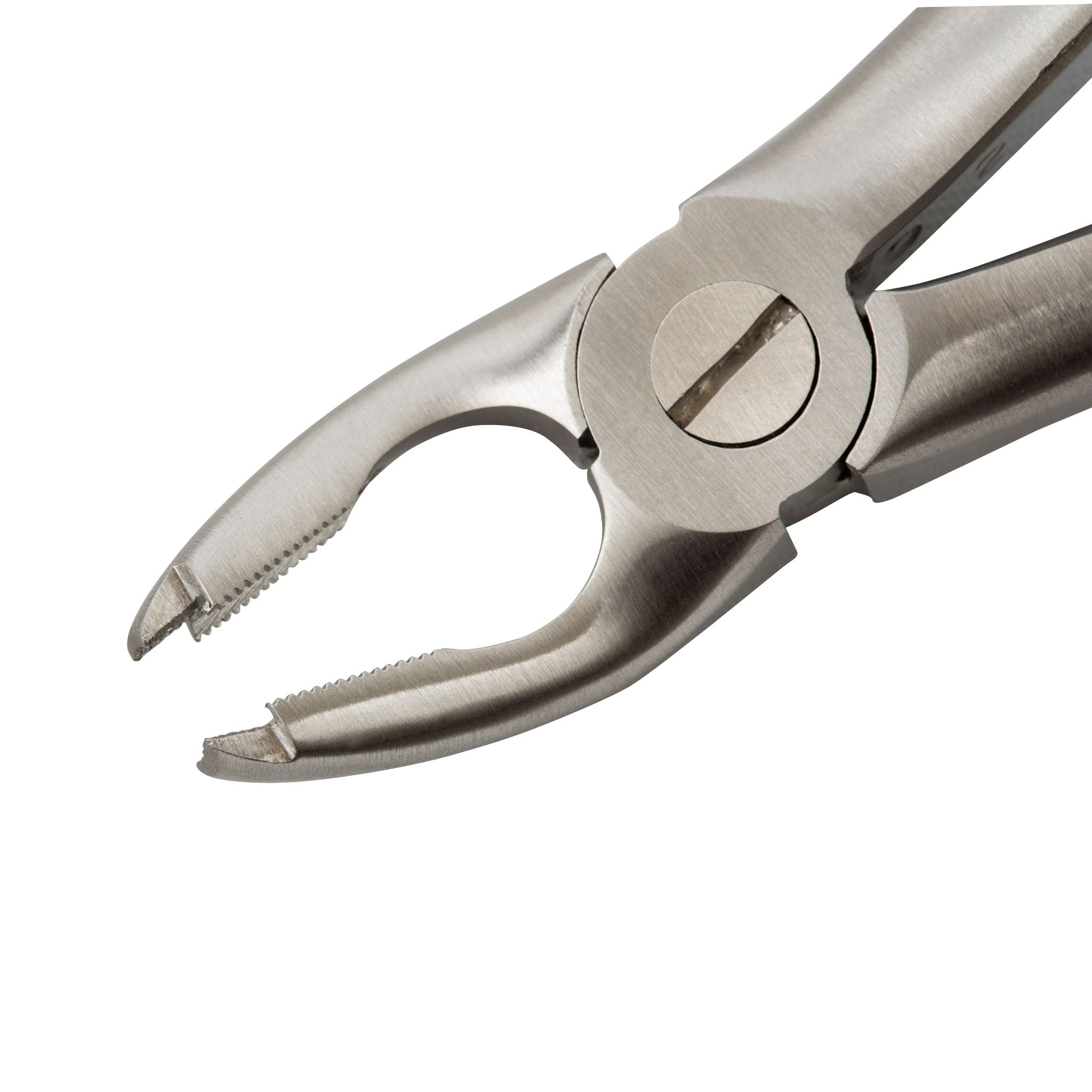
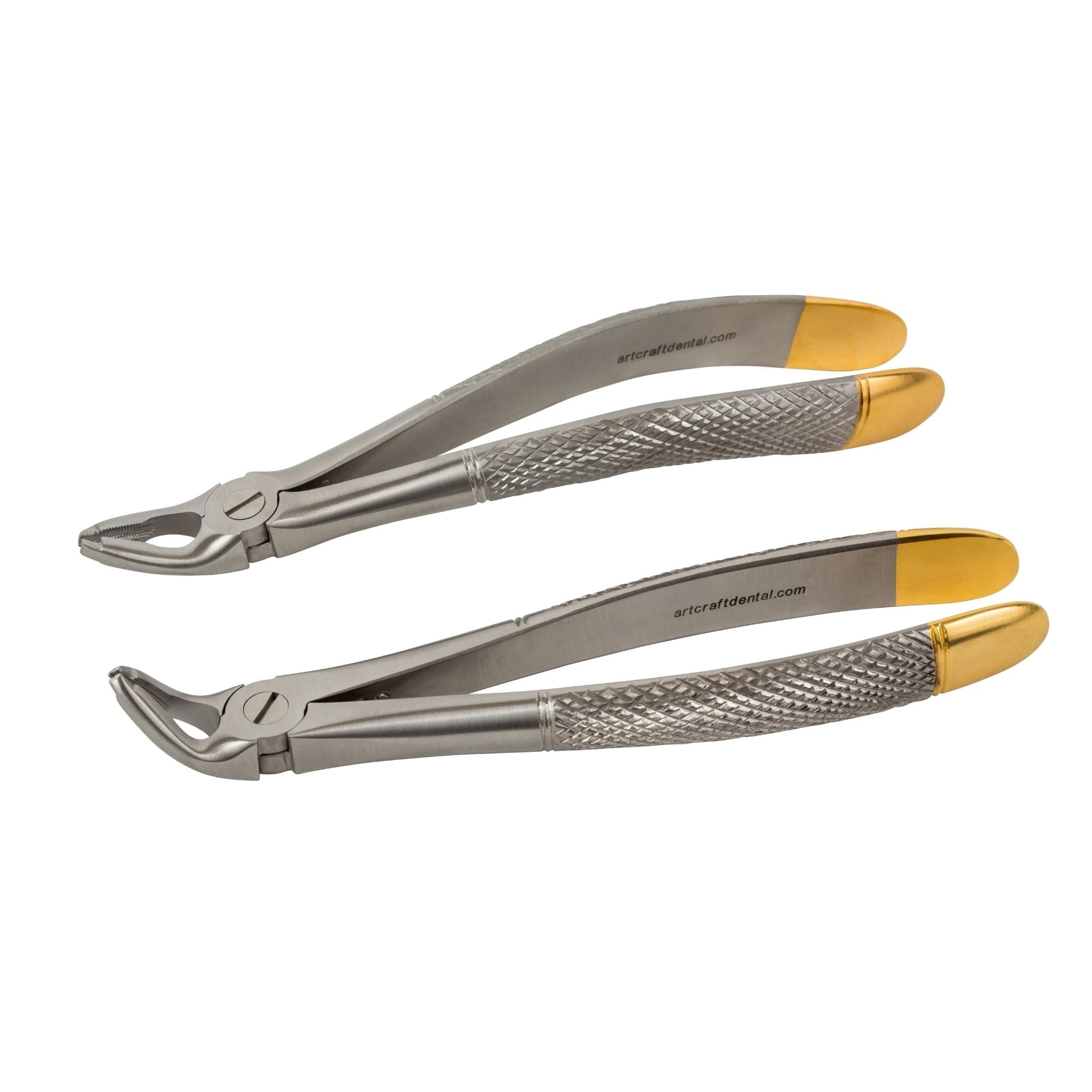
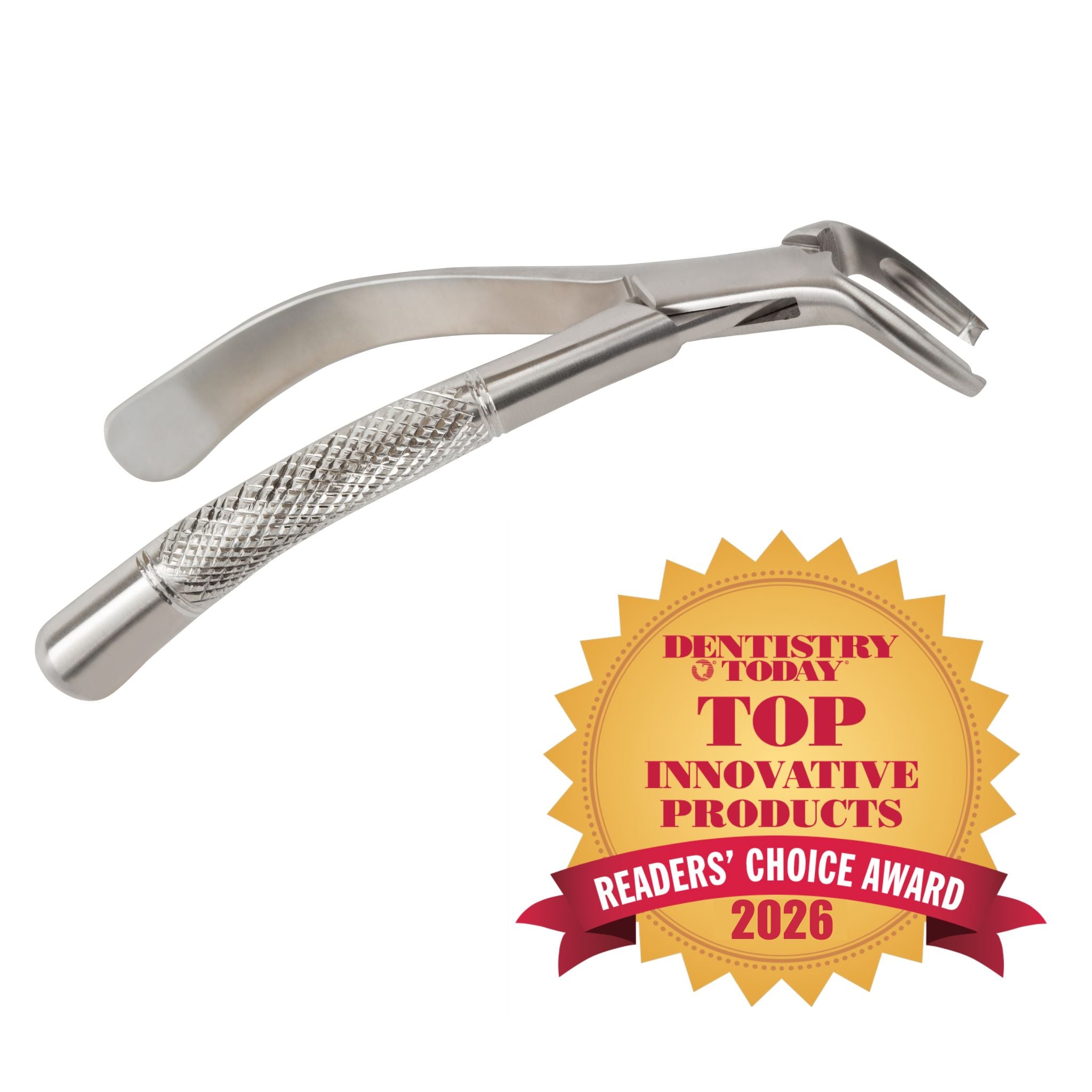
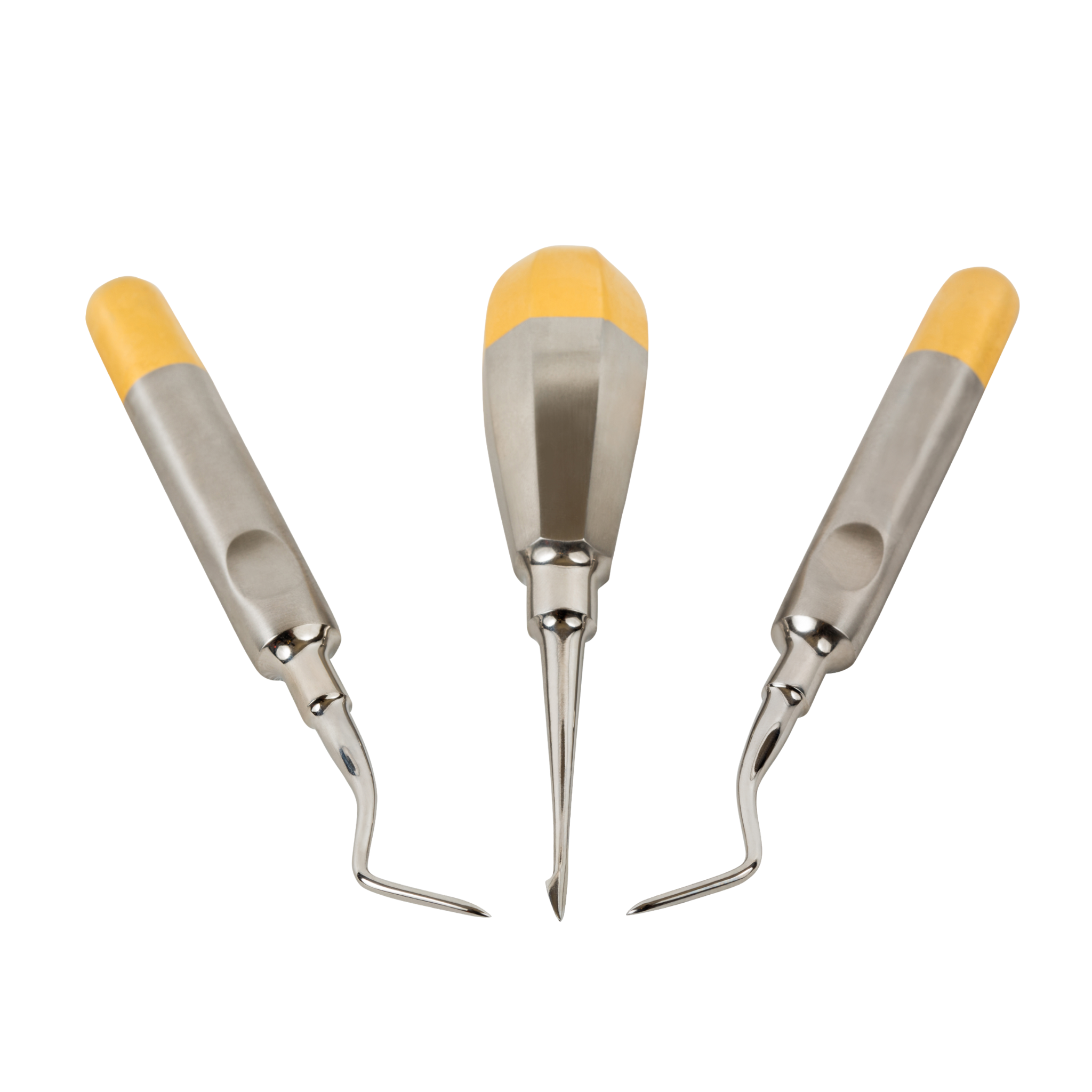
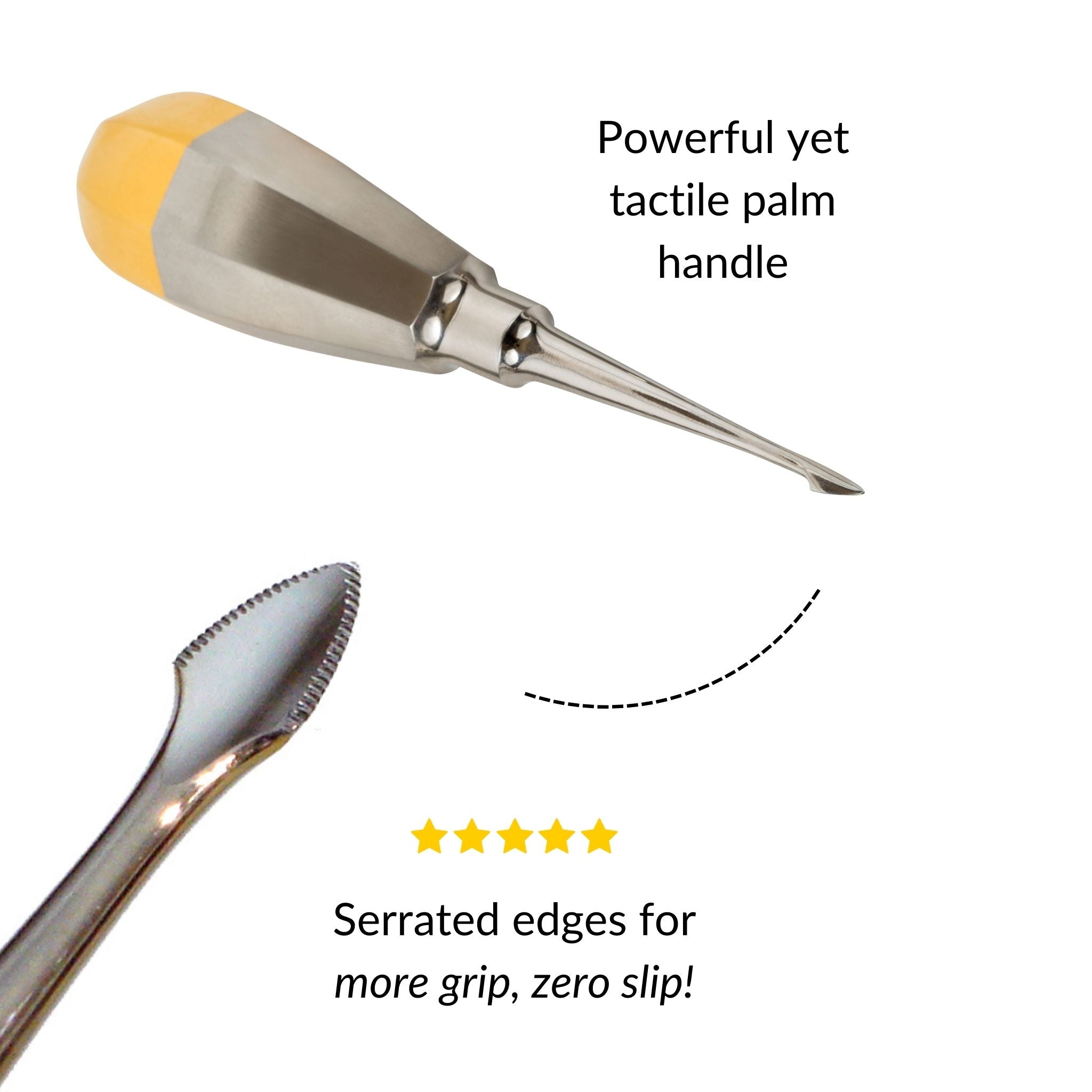
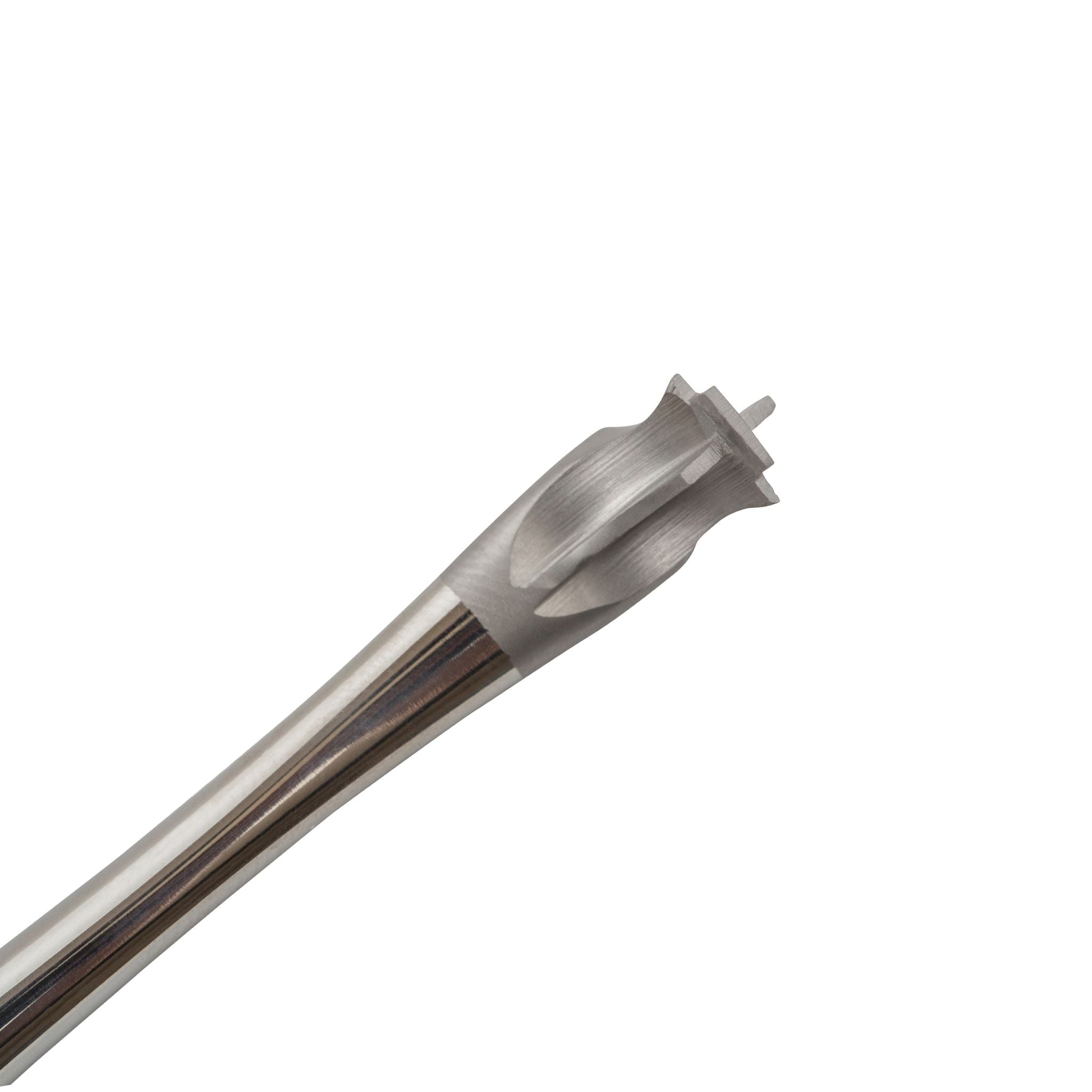
The instrument is specifically engineered for temporary crown removal — with a specially designed tip that locks onto the provisional. Because of its four sharp points of contact, TempOff® does not slip. Most removals take two to three seconds. Even particularly stubborn provisionals come off in under thirty.
That time saving sounds small per procedure. Across a day of restorative appointments with multiple temporaries — seating and removing — it is not.
2. Max Crown Spreader™ — Permanent Crown Removal in Under a Minute
When a permanent crown needs to come off, most dentists default to sectioning it completely and removing two separate pieces. The problem with that approach is clinical, not just time-related: cutting the crown all the way through removes the point of resistance that makes spreading efficient, making the second half harder to remove than the first.
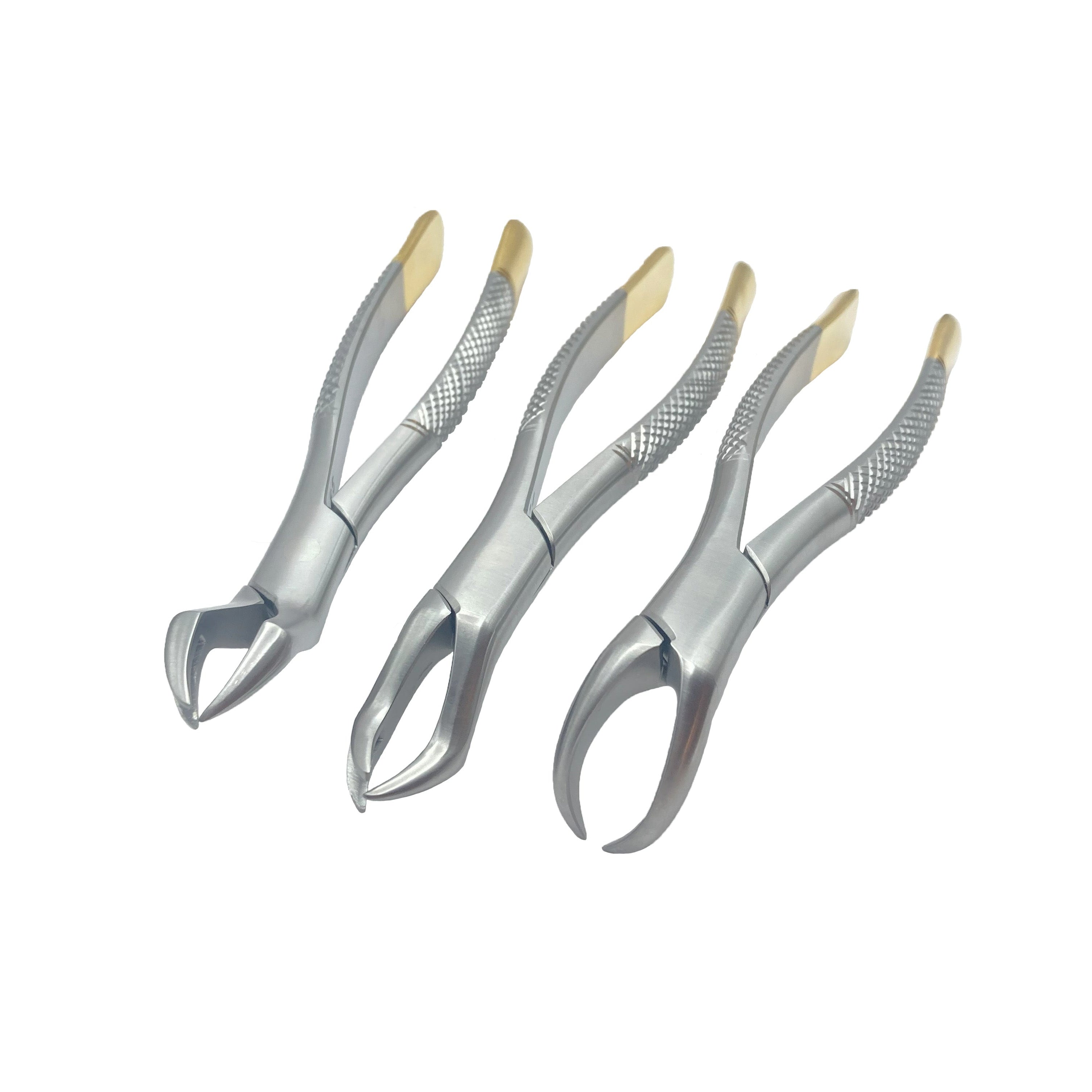
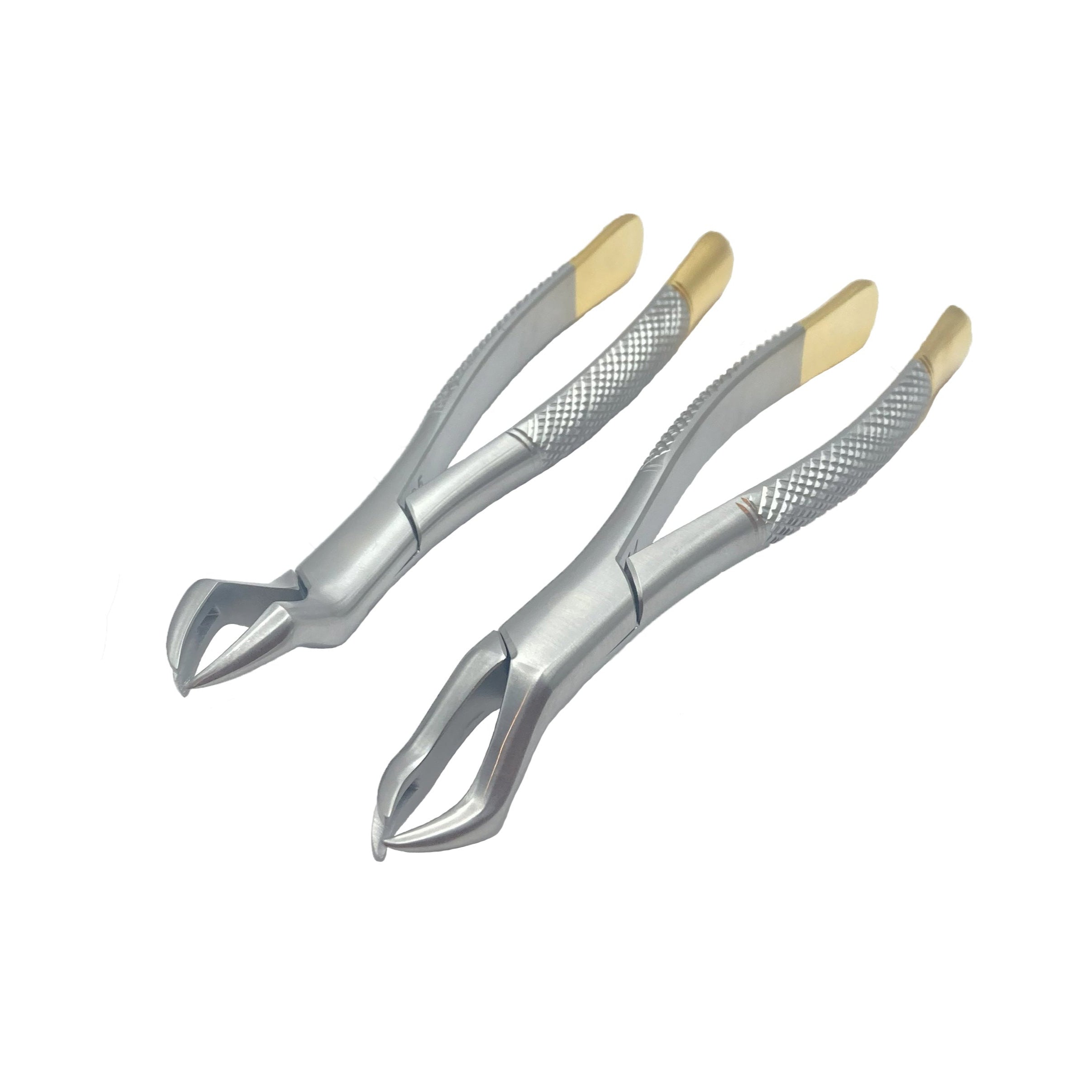
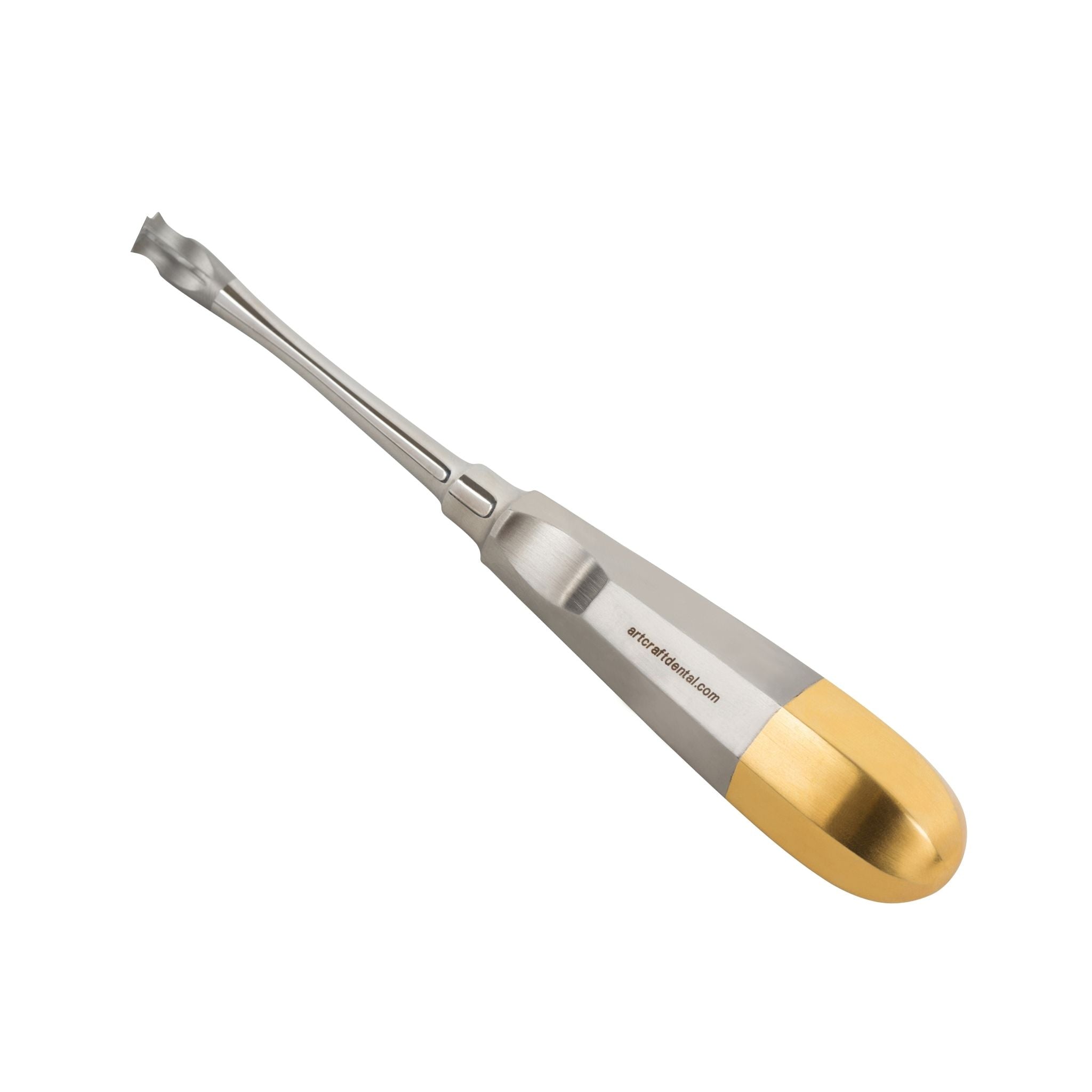
The Max Crown Spreader™ works differently. Cut two-thirds of the way through the crown — leaving the lingual margin intact — seat the multi-directional tines into the slot, rock up and down, and the crown spreads open and pops free. Start to finish, under a minute in most cases.
The instrument's tines are precision-matched to the slot created by the Metal Buster™ Bur for PFM and metal crowns, and it pairs equally well with the Zirconia Buster™ for zirconia cases. The multi-directional tip design means you can approach from any angle — which matters significantly on posterior teeth where access is already limited.
For practices doing regular crown and bridge work, this instrument alone changes the calculus on crown removal appointments. What used to be an extended procedure becomes a predictable, fast workflow.
3. CompPlus™ — Non-Stick Composite Placement Without the Pullback
Composite pullback is one of those problems dentists accept as inevitable — until they use an instrument designed to prevent it.
When composite sticks to your placement instrument, it pulls away from the prep wall as you withdraw. That creates open margins, voids, and restorations that look fine until they fail. Fixing it means adding more material, repositioning, re-curing, and spending time you did not budget.
CompPlus™ is built with a specialized non-stick coating that prevents composite adhesion to the instrument surface during placement and sculpting. The material goes where you put it and stays there. No pullback, no repeated adjustment, no contamination concern from mid-procedure instrument switching.
For practices that place composite regularly — particularly multi-surface restorations where margin integrity is critical — the difference in workflow is immediately noticeable.
Two instruments worth mentioning alongside it: Seamfree™, a non-stick agent that can be applied to any composite instrument to reduce adhesion, and The Microtray®
4. Super Matrix Remover™ — Sectional Matrix Removal Without Disturbing the Restoration
Removing a sectional matrix band from a tight contact area is one of those five-second tasks that occasionally turns into a two-minute problem — and when it does, it usually involves some risk to the freshly placed restoration.
The standard approach with a hemostat involves prying and wiggling in a confined space with limited visibility. When the contact is very tight, that process can dislodge the band in a way that displaces composite or fractures a cusp in a compromised tooth.
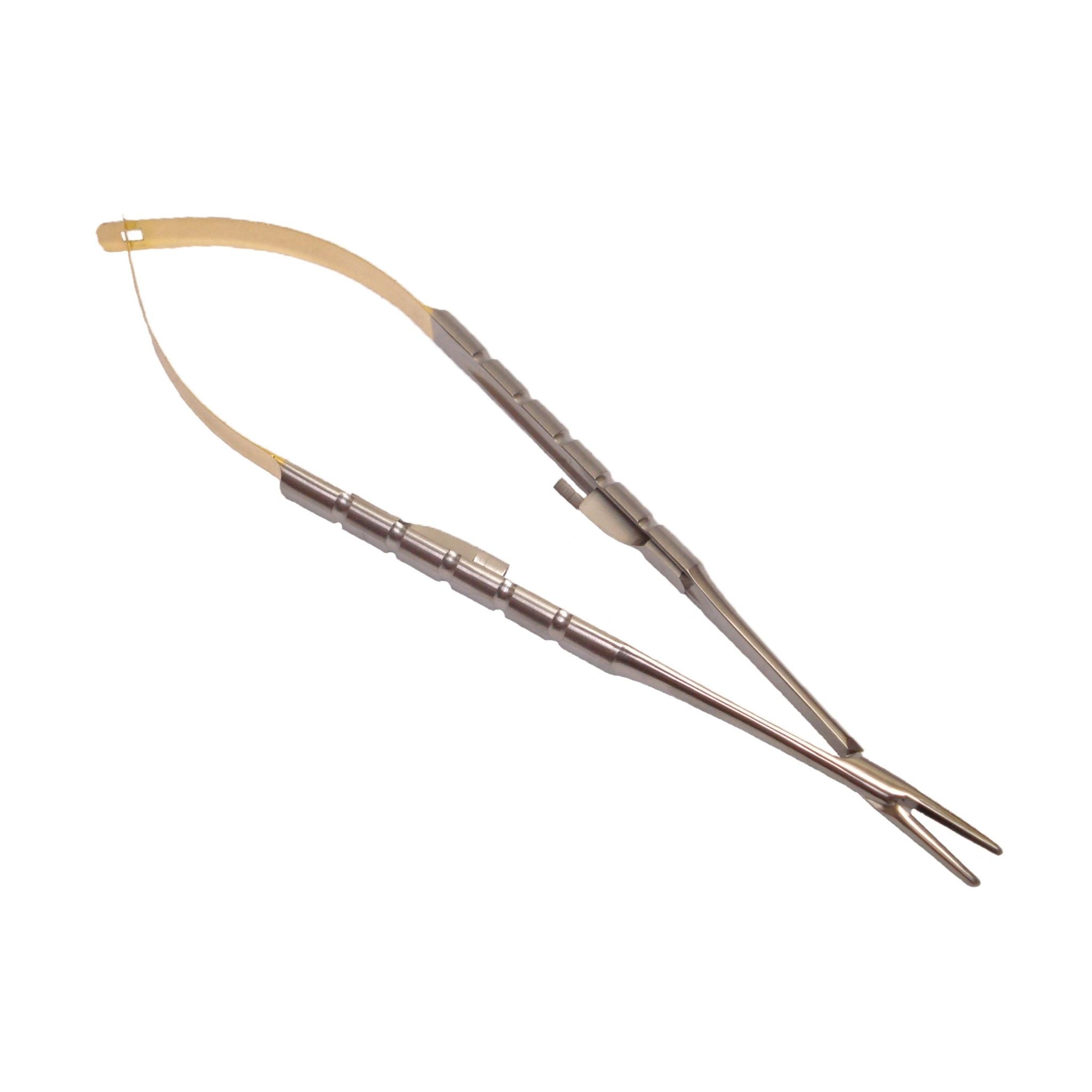
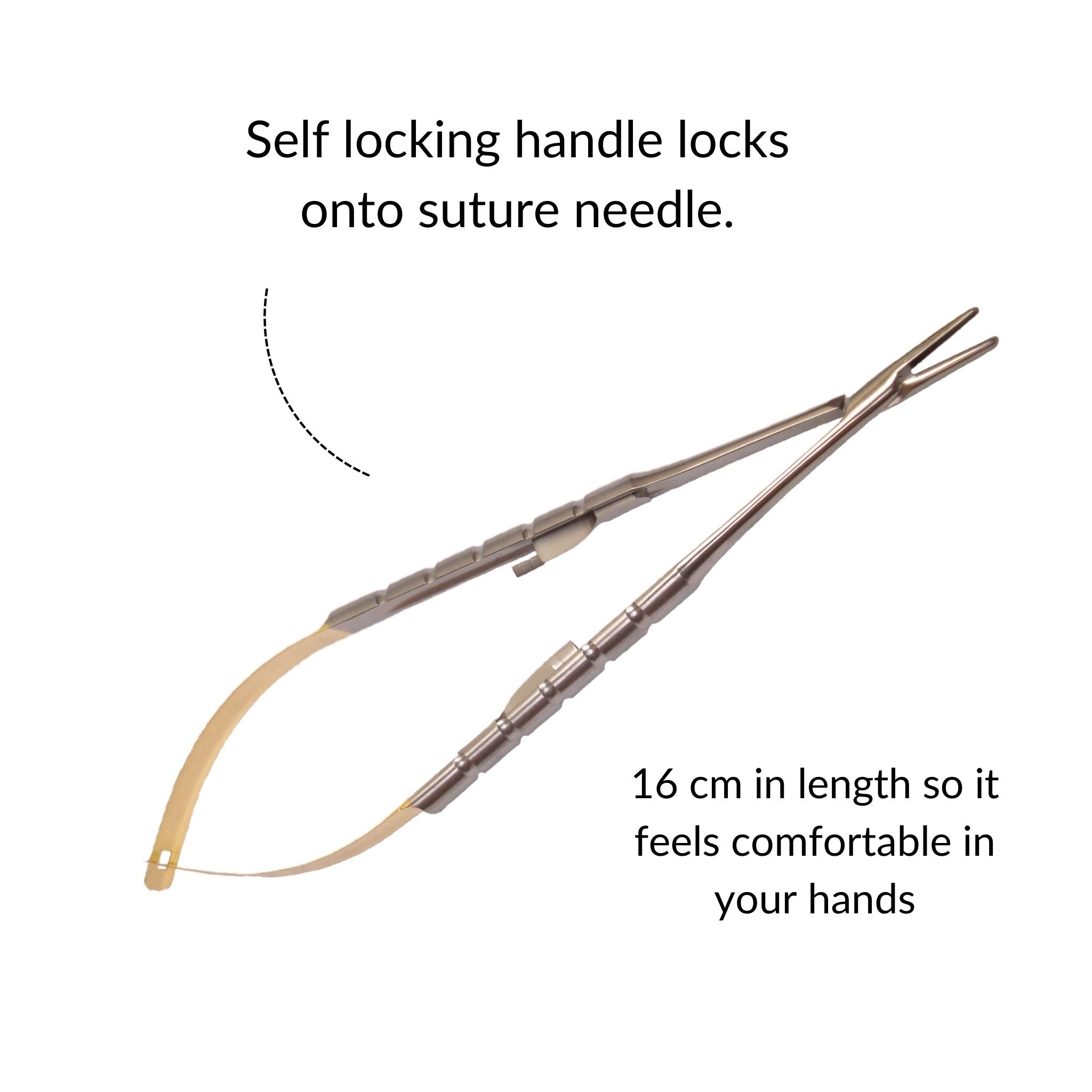
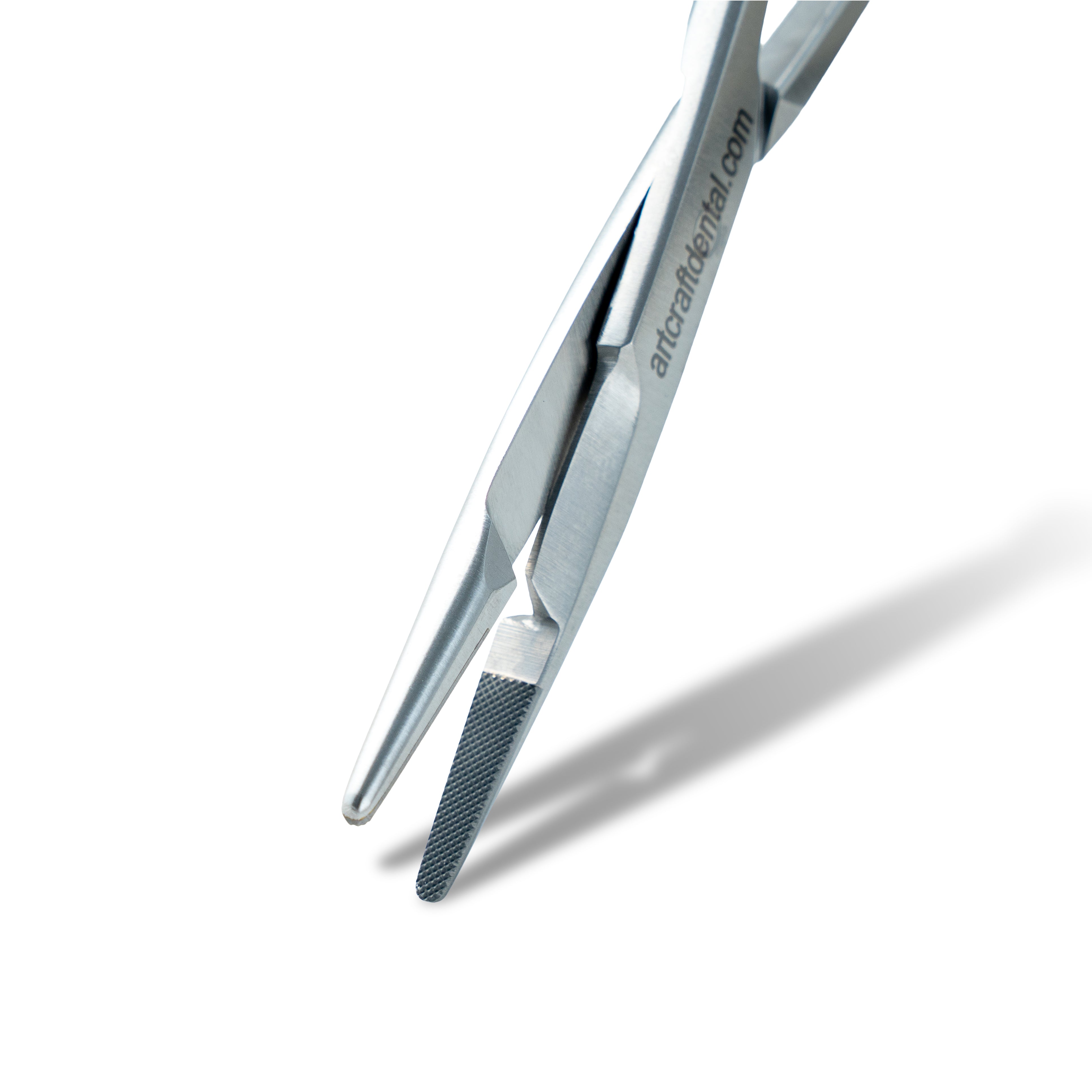
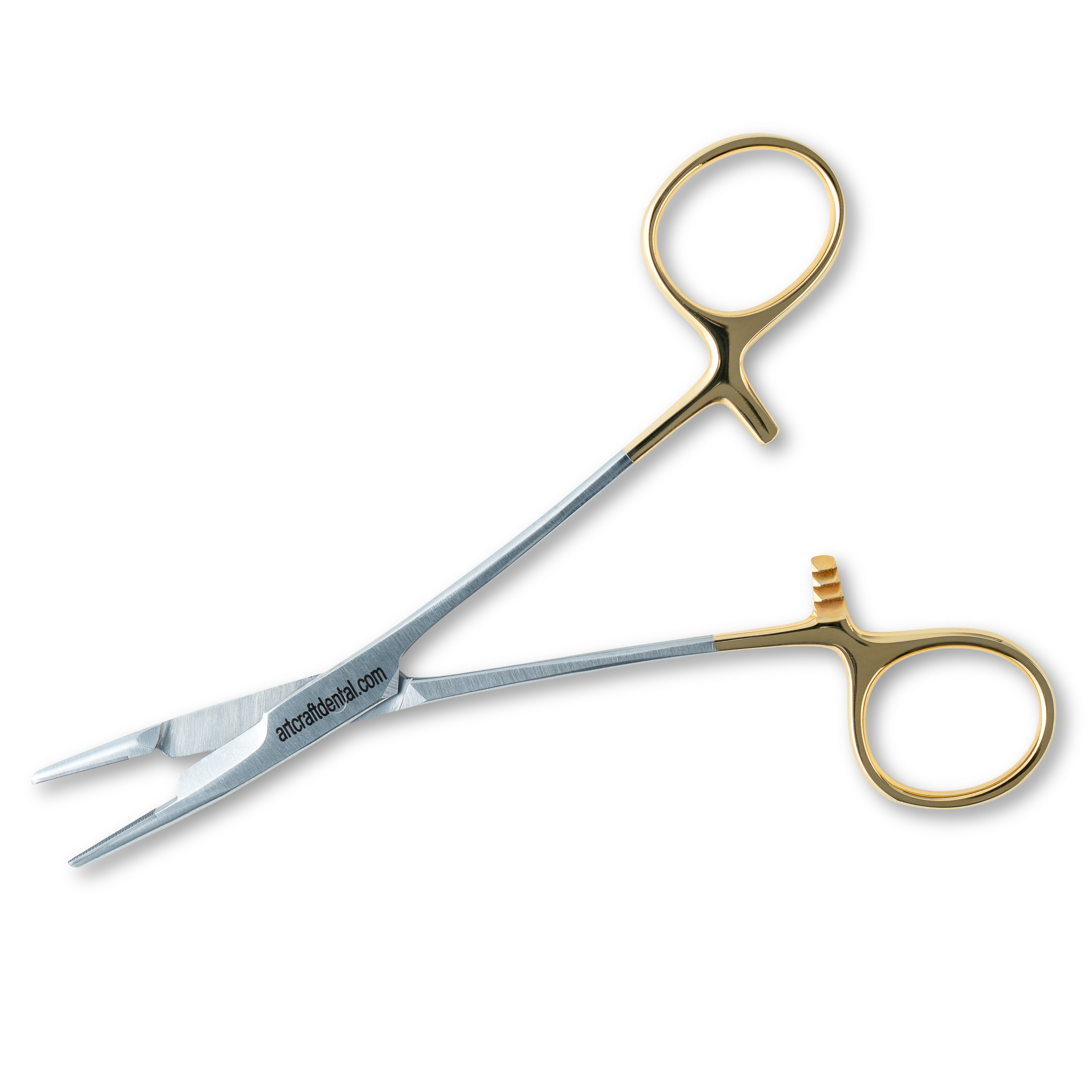
Super Matrix Remover™ uses tungsten carbide tips that lock onto the sectional matrix with a grip strong enough to lift over 50 times its own weight. The instrument holds on even in extremely tight contacts — giving you a controlled, direct removal rather than the prying and rocking that risks disturbing the restoration beneath.
Its natural pair is the Super Matrix Placer™, which uses the same tungsten carbide tip design to place sectional matrices predictably even in very tight interproximal spaces. Using both instruments together replaces one of the most consistently fiddly parts of Class II composite workflow with a fast, controlled sequence.
5. Spot-On™ Verifier — Crown Prep Clearance Without the Guesswork
Crown preparations move efficiently when clearance is confirmed with accuracy and precision. They stall when you're estimating reduction by eye, second-guessing margin depth, or discovering mid-case that your prep falls short of the required clearance.
Spot-On™ Verifier gives you a precise, visual confirmation of crown prep clearance before you ever take an impression. The instrument features a 2mm end for verifying occlusal reduction and a 1.5mm end for confirming ceramic margins — so you can measure your crown preps with accuracy and precision, rather than relying on estimation alone.
The clinical payoff is confidence at every stage of the prep. For a practice placing multiple crowns per day, catching insufficient reduction before the impression eliminates remakes, re-preps, and the chair time that comes with them. When your clearance is verified from the start, the rest of the case follows smoothly.
The Common Thread
None of these instruments require changes to your clinical technique. They are drop-in replacements for the tools that are already causing friction in your restorative workflow — instruments that were designed around actual chairside frustrations rather than generic catalog specifications.
ArtCraft Dental was founded by Dr. David Fyffe, DDS, after four decades of encountering these exact inefficiencies firsthand. The instruments in the restorative line — and across the full catalog — exist because he decided to solve problems rather than continue working around them.
If restorative appointments feel consistently slower than they should, the instrumentation is usually worth examining before the schedule. Most of the time, the procedures are not the problem.
The instruments are.
Explore the full ArtCraft Dental restorative instrument lineup — all backed by a 60-day money-back guarantee and free shipping on every order.